• I’m not one for scary movies. Honestly I’m not. I freaked out after watching Paranormal Activity and was haunted by The Others for days after I’d watched it. I can’t watch gory series’ like The Walking Dead or American Horror. I’m just too easily spooked. 

    So when I found out Netflix had released a movie – albeit a ‘thriller’ – featuring a main character who was deaf, I was in a dilemma. 

    Do I leave it to others to tell me about it? Or do I grab my man, hide behind him and attempt to watch whilst silencing my squeals with a pillow to prevent waking up our children…? 

    I opted – bravely – for the latter. 

    Seeing as the movie was centered around a killer who had targeted a deaf lady for fun, this is in no way a film review. I find mindless violence disturbing and would never choose a film of this genre to watch, let alone rate. 

    But I was interested in seeing how the actress portrayed deafness, especially as she was hearing. And as my Twitter feed was flooded with tweets regarding the unfairness of not casting a deaf actress, I wanted  to see what all the fuss was about and form my own opinion. 

    So…I watched it – all of it. Despite my other half disappearing halfway through because he deemed it ‘silly.’ 

    And my verdict? It was okaaay. The actress did well to feature sign language, exaggerated facial expression and I particularly loved how she used her sense of touch to know when the killer was near… 

    But – the signing fluctuated from ASL to PSE (the more English based American Sign Language) and her lip pattern changed from being non-existent to overly accentuating. It wasn’t consistent. And therefore I didn’t believe her..

    Other points that irked me included how she failed to notice her neighbour being murdered in her peripheral vision; couldn’t feel the vibrations from pounding on her glass kitchen window; and couldn’t sense a stranger entering her house leaving the door wide open and the cold wind blowing inside…! 

    And somehow she could lipread a stranger about 20 feet away. I spent a lot of viewing time just sighing in exasperation. 

    On the plus side, having a deaf character in a film is great publicity for the deaf community and raises the profile of sign language automatically. But as it rarely happens, I guess this is why we are fussy. We want it done right!

    Deaf actors and actresses from the United States were left reeling when the director of Hush stated they had no intention of casting a deaf actress and the film was written by the lead actress – Kate Siegel – and her director husband. 

    A deaf actress spoke to me about hearing actors in the States abusing the privilege of being able to work on any movie without barriers and how mainstream opportunities for deaf actors worldwide are dwindling. 

    It’s therefore been another blow for this community to discover that yet another movie, this time a Hollywood blockbuster called Wonderstruck, stars a hearing actress in a deaf role. 

    Judging from tweets from directors and actors on both movies mentioned, it appears the hearing acting world are not aware of just how repressed deaf actors are. 

    They do not understand that as a deaf actor auditions are limited and dependent on the communication skills required. Even the best lipreader with the clearest speech may not be able to convincingly seem “hearing.”

    And this is why despite learning sign language and playing on the usual deaf cliches, a hearing actor cannot always seem “deaf” – no matter how well trained they are.

    So, all of you directors out there, if you want authenticity and real deaf quirkiness and mannerisms in your movies – choose a deaf actor. Or at least give them the chance to audition… 

    And as for Hush. Hmm, I think I’ll sleep easy šŸ˜‰

  • It’s a concept I’ve personally known to be true since… Forever. Deaf people can dance. The ability to hear does not directly affect the ability to be rhythmical. Rhythm comes from within. Every good dancer knows that. 

    So imagine my delight to find that vodka brand Smirnoff were launching a new inclusive campaign to celebrate diversity and equality for deaf people. Featuring dance, of course. 

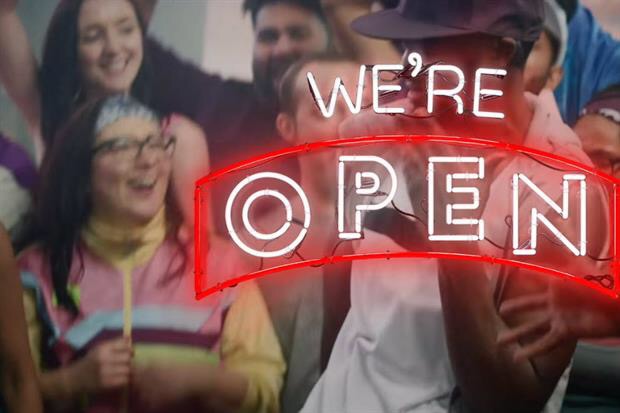
    Smirnoff’s “We’re Open” campaign shot a commercial earlier this year featuring a group of deaf dancers being taught by London based deaf dancer Chris Fonseca. 

      
    Those already on the deaf dance circuit may recognise Chris from his time in the deaf dance crew Def Motion and also as a solo freestyler across the country. So Smirnoff did a great job by choosing an authentic deaf dancer who lives, breathes and sleeps dance to lead this campaign. 

    Armed with catchphrases such as “we’re all equal on the dance floor” and “dance is a universal language,” Smirnoff employed a group of deaf actors and dancers to work with Chris to demonstrate that we are all more than able to hold our own on the dance floor. 

      
    I was fortunate enough to be involved as a studio dancer and despite street dance not really being my ‘thing’ I thoroughly enjoyed coming together with other deaf dancers to enjoy the power of movement. 

    Dancing alongside me were a real mix of talents including film maker David Ellington, freelance media creative Fifi Garfield and actor Will Lewis. None of these were classically trained in dance but all passionate about performance and with a natural talent for getting funky. 

    “I am not a pro dancer and emailed them to let them know that I am an ok-ish dancer and she says that’s the whole point – to see all of us having fun dancing.” Fifi Garfield

    “It was a significant moment for Deaf people and I had to be there. The exposure and impact on mainstream was not be missed.” Will Lewis

      
    -backstage with David Ellington. 

    You may have already seen the commercial as its been launched on British television and soon will hit the United States. The billboards have been dotted across the country, with exposure for deaf dancers at the highest it’s ever been. 

    On Facebook and Twitter the #deafdancers hashtag is trending and on Smirnoff’s tumblr site there’s a whole list of images and moving GIFs taken from the shooting day. The response has been mostly positive, with only a few select comments asking about the authenticity of the deaf dancers and whether or not the whole thing was staged…

    Well, truth be told there were indeed some non-deaf dancers involved (some of which are awkwardly featured on GIFs with the hashtag #deafdancer) but most were either CODAs or had their own unique connection to sign language and the deaf community. Sure, there were a couple of hot hearing dancers just thrown in for good measure but this is TV after all. 

      
    That said, I feel that Smirnoff missed a trick by making out that it’s a dance group made up of entirely deaf dancers. Seeing as Chris was the teacher and deaf himself, would it not be more impressive to show the truth – that this was a deaf dancer teaching a routine to hearing people too? Would it not be more powerful to demonstrate how his deafness does not limit him to only teaching deaf people but his dance ability overcomes all? 

    Because that is what really happened. Chris, a very talented dancer taught us – group of mostly deaf and some hearing dancers – a routine and we all danced. Together. As equals

      
    But I get it, maybe the world isn’t ready to see that yet. That’s probably why Smirnoff mention in one of its interviews the cringe worthy notion that deaf people feel the vibrations; a statement I’ve always disliked because it creates the assumption that we feel things wherever we are with some kind of superhuman power. 

    Deaf dancers at Gallaudet University recently reported that they learn rhythms by repetition and rehearsals. Nyle DiMarco, a deaf model currently starring in Americas Dancing with Stars also stated he stays in time by visual cues and memory. And as a dancer who trained classically at University with a profound deafness, I can attest that this is true. 

    But like I said – it’s television. 

    That bugbear aside, the ‘We’re Open” campaign is a fantastic opportunity for working deaf actors and dancers to come together and showcase their talents. 

    Whilst the nitty gritty details of the commercials tag line and selling point may not be entirely true, I believe the truth is even better. In this day and age deaf people can dance but also… Deaf people can teach. Anybody. Deafness aside. 

      
    I take my hat off to Smirnoff for sourcing real deaf talent and I applaud Chris Fonseca, the star of the campaign, for his enormous achievement and talent. I sincerely hope this will be the start of more mainstream opportunities for deaf dancers and also for more misconceptions to be  quashed. 

    So… you wanna dance? We’re open šŸ˜‰ 

      
    Watch the commercial here: Smirnoff We’re Open

  • There are only 21 deaf schools in the UK now, compared to back in 1982 when there was 75. The drastic decline is frightening especially when it’s been recorded that only 36% of deaf children are attaining 5 GCSE’s grade A*-C. 
    In my eyes it’s not all to do with intelligence. A deaf child can do anything, providing they have the right support in place. It’s mostly down to accessibility. 
    Now, some people have argued that with technology improving mainstream schools are now much better at providing for deaf students. By technology I’m assuming they mean hearing aids, radio aids and whatever other amplification or alerting equipment they may use. 

    But as someone who has attended both mainstream and a specialist deaf school I can see clear distinctions between the two. 
    I worked hard at mainstream school and I did very well, no doubt about that. But I was insecure and on edge the whole time I was there.

    I hated the radio aids I was given to wear and made to look different by. I avoided speaking in public, blushing whenever I was made to and I spent most days urging the school clock to hurry up so I could go home. My mum always said I was ‘wishing my life away.’ But I just knew I felt repressed. 

    At mainstream school it was often a battle to get the education just right for me. I didn’t want to be pulled out of French and Music lessons like the other deaf students so my parents made sure I remained in class.

    And I didn’t want to be segregated from my peers and made to sit alone with a support worker, so there were more meetings about that. My French teacher gave me additional lessons so I could practise lip reading for the oral exam and truth be told, I worked my socks off to get the grades. 

    I left mainstream school with 11 good GCSEs but very little confidence in myself. 

    I started at Mary Hare school for the deaf in 2002 and referred to it as a ‘dream school.’ Sure, I was a teenager and amazed by all the -ahem – attractive boys, but more than that I felt for the first time in my life normal

    Having a chat with peers was no longer an awkward struggle. There was just one teacher of the deaf in each class, no support worker beside me taking notes or interpreting. I felt truly independent. It was brilliant. 

    I continued to work hard but the other areas in my life were beginning to be fulfilled too. I had friends. I had hobbies. Boyfriends! I was no longer hiding away in the background. I was being true to myself. 

    More importantly for my career, my tutors noticed my passion for performing arts and gave me an education in it like no other. I received tuition in singing, dance, playing the drums and as a stage performer. 

    Throughout my five years at mainstream school I was never once cast in a show or given a speaking role in a production. At Mary Hare I got lead roles in each show I did. It enabled me to pursue a career in the arts, encouraging me to take my dance degree and to eventually getting roles in TV and film. 

    I don’t think I would ever have had the confidence to pursue my passions without having gone to Mary Hare. I would have remained in the background, quietly working hard but never wanting to be seen because of how insecure and ‘different’ I felt. I probably would have remained very lonely too. 

    That’s why attending a deaf school, for me, is about so much more than just the education. Yes it is accessible and deaf-centered, but more than anything it supported my self esteem and sense of identity in a way that mainstream school could never do. 

    Hearing people take for granted the ability to feel ‘the same.’ But if we put a bunch of them in a deaf school and labelled it ‘mainstreaming’ I’m sure they would appreciate just how difficult it can be to blossom in an environment where you naturally feel inferior. 

    Of course, mainstream school can be a great experience for a lot of deaf students and in no way are two deaf people ever the same. But you know that feeling where you go somewhere and everyone’s like you and it feels natural and easy and like coming home? That was Mary Hare for me. 

    I hope every deaf student finds that place of their own, wherever that may be. 

      
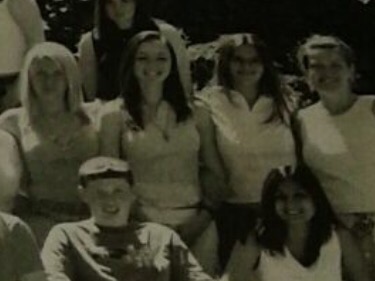
    – me (second left) with a group of peers at Mary Hare. 

  •   

    Whether you’re aware of the #deaftalent hashtag trend that’s circulating social media, there’s a storm brewing in the deaf world. Or amongst the thespians at least. 

    I say this because I’ve sensed for some time now a rising discontent when it comes to getting roles. Or – more to the point – at those bagging most of the roles. 

    You see, a few hearing performers I know of recently worked in sign language roles, and subsequently faced the wrath of the deaf community. 

    Regardless of whether they have deaf family or fluent signs, the general view from the deaf community has always been that roles with sign language should be given to deaf actors. Simple. 

    Well… Not really. The thing is casting directors – more often than not – will ask to see actors ‘with sign language.’ This loophole means that they don’t have to be deaf, they merely need to act and sign well on screen. 

    The director will have a vision for the production and will want to match it. Whether or not the actor is profoundly deaf, hearing impaired or a CODA (child of deaf adults) is not always of interest or use to them. 

    This means that as an actress who is deaf I can’t fall behind my deafness and expect it to do the work for me. It’s my acting skills and role suitability that will get me jobs, not my lack of hearing. 

    But I understand we need more representation on screen from artists who are truly deaf! We want inspiration, role models! We need real life demonstrations that anything is possible. 

    And we do have that in a way in the form of Nyle DiMarco, the winner of America’s Next Top Model who is also deaf and a sign language user. He won, not because he’s deaf, but because he’s a blooming good model. Which is why the mainstream regard him as a ‘model who is deaf’ rather than a ‘deaf model.’ His work is not limited by his deafness.

    But aha- that’s where the modelling world differs from acting. On stage and on screen it’s all about communication – so our deafness can’t help but be on show. 

    For most of us, the moment we speak or sign we are outed as ‘deaf.’ And so we can’t help but be pigeon holed as ‘deaf actors’ and sent only for roles featuring sign language, or for characters with a hearing loss. We can’t play just anybody. 

    So this is where the discontent towards non-deaf actors in sign language really lies. Seeing as they have all the mainstream roles to choose from, aren’t they being a bit… Greedy? Can’t they leave the deaf roles for us?! 

    But, *sighs*. Acting. TV. Commercials. It’s a dog eat dog world. Hearing people who know sign language have every right to put ‘BSL’ on their CV’s list of languages and they have every right to attend auditions with sign language too. 

    But what I want to know is why don’t we – the deaf actors – always know about these auditions? 

    Hearing actresses I recently worked with spoke about auditioning for a role in a music video that featured sign language. Nobody in my agency had even heard about the opportunity. 

    And then the said music video pops up online featuring an unknown actress with stilted signs who is is hearing… 

    I’m not anti-hearing (my family’s full of them ;)) but you can’t help but wonder where the deaf artists are. 

    A band I had hoped to work with recently also decided to use interpreters for their shows instead of deaf artists, blaming the decision on their budget…

    And casting directors have postponed work purposely because they couldn’t find  enough deaf actors. When I personally know there to be loaaaads of us. 

    Sure, my deaf acting buddies may not all fit the directors criteria but if people aren’t actually finding out about roles, can somebody tell me what’s going on?  

    Are we not sharing enough? Encouraging each other? Are we harbouring audition information as deaf roles are hard enough to come by anyway…? I don’t know. 

    We have the deaf actors. And we have the talent. But the opportunities seem to be getting lost. 

    Are we getting lost in the mainstream? Do we need to raise our signs and get ourselves heard? Noticed?

    I think we need a plan. A plan, not to prevent hearing actors from going for opportunities, but one to ensure that those who are deaf are being given an equal chance too. 

    So come on, #deaftalent or #talentthatisdeaf who’s with me? 

  •   
    An advert came through my door today. A local newsagent is looking for people to deliver the mail. Age is no barrier, they said. Dog walkers welcome! Insomniacs very welcome – their words, not mine. 

    Yet I was left puzzled by the criteria next to “Qualifications.” They did not mention good sense of direction or reasonable fitness – they said 

    providing you can see, hear and move normally , there aren’t any. 

    But what’s normal anyway? I’m short sighted and use glasses to drive – does that mean my eyesight is abnormal? And if I’ve been dancing too hard my left foot gives way resulting in a swagger like walk – is that not a normal way to move? 

    I’m being picky – I know. 

    But seeing a point being made about needing to have normal hearing to post mail touched a nerve.

    Do they not know that Derby has a higher than average number of Royal Mail post men who are deaf due to the city having the second largest deaf community in England? 

    And would this advert not exclude youngsters who are deaf yet still have great work ethics and are ready to be independent and earn a bit of pocket money? 

    Before the newsagent require mail deliverers have normal hearing, they should take a look at who’s actually delivering their mail. Professional, able, postmen – some of whom who are also deaf. 

    That sounds very normal to me šŸ˜‰ 

  •   
    Working in Mindfulness, I often try to be objective, to encourage others to see life and its happenings from a neutral standpoint.

    But – when life throws us a curveball and we experience painful or intense emotions — it can seem impossible to remain neutral and therefore we can become easily overwhelmed.

    It’s true that life isn’t always easy, and it’s not always fair. 
    But Mindfulness isn’t about creating happy endings or sprinkling fairy dust on difficult situations. It’s not a way out of life, it’s a way through.

    And it’s something that I’m using right now.

    You see, very recently – around 7 weeks ago – I lost a relative who was very dear to me. It is the second loss in our family in the space of 3 years, a period of time that has seen me move house twice and have two babies. An intense period, to say the least.

    And the loss, if I’m honest, is only just beginning to settle in. But I’m noticing it and I’m aware. I’m noticing how my thoughts drift to memories, both happy and sad. I’m noticing my tendency to hold it all in and keep face in front of my children.

    I’m noticing the lingering sadness and how I want to shout to the world ā€œWait! Stop!.ā€ I’m even beginning to question things, to look at life differently. Morbid, I know. These are not thoughts I’m comfortable with.

    But Mindfulness asks us to welcome our emotions, to accept how we’re feeling. Not to pretend, not to hold it all in; which is everything I’ve been doing. So it’s only right that I should begin to purge. So that I can see the thoughts and feelings that I’m struggling with and give them a channel of expression. It’s only by allowing these feelings to flow that I’ll allow myself to move forward.

    Mindfulness also asks us to be kind to ourselves. To nurture ourselves and practice feelings of loving kindness to ourselves and others. But boy can it be hard to feel loving when you’re in the midst of grief. Bitterness and anger easily set in. But that’s okay. Go easy on yourself. It’s all part of the grieving process.

    I’ve noticed how addictive it can also be to get lost in our thoughts during this time. So anything that gets us back in our bodies, focused and present, can ease us through difficult periods.

    That explains why I’ve been immersing myself in crafts lately. Night times are often when my mind turns to overthinking and sadness, so instead of getting consumed by thinking, I lay out my crafts, sit and create. Just flowing, just breathing.

    There’s no quick fix for grief. It’s an ongoing process with ups and down that we as humans must flow with. We all experience it in some way, one day. We are therefore all united in our grief and in our love too.

    And isn’t that what Mindfulness really is about? Remembering we are all here to love, to forgive, and to simply be together.

    It’s the conversations we have, the way we make others feel and the little, thoughtful things we do that are everlasting. The values. The love. They’re what people remember when they lose someone, and they’re what are most missed.

    A quote I read today said very aptly that grief is, after all, just the price we pay for love. And in an odd little way, it’s really helped me. I don’t mind missing my loved ones now, because all that the tears do is show how much they meant to me. If I didn’t love and treasure them, I wouldn’t feel their loss as deeply. So in a way, that’s a real honour.

    So when I turn to my sitting meditation practice and I feel the dreaded grief and loss within me, I’ll look a bit deeper. Because within all loss is real love and it is this certainty of love that will carry me through the loss.
    Thanks for reading.
      
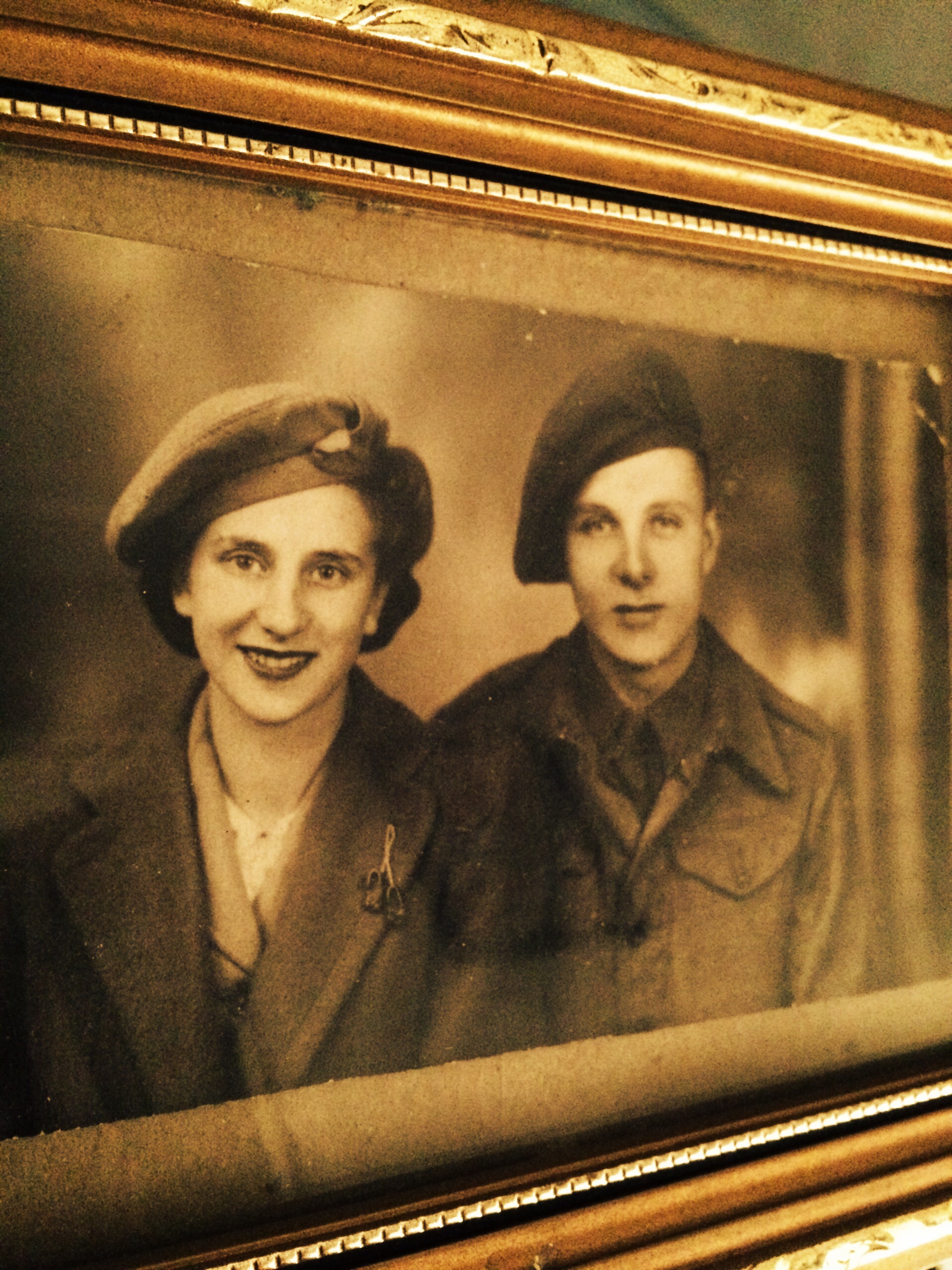
    -Written to honour the anniversary of the most beautiful couple. Dearly missed but very dearly loved. 


  •   

    I’ve been working on a pretty exciting project this week. It’s mainstream with an enormous audience and its main focus is all about demonstrating that deaf people can do anything. 

    It’s an idea that’s been around for a while and that I thought was starting to get a bit old hat. Of course deaf people can do anything! We are already breaking barriers, challenging perceptions and working in the mainstream arts. 

    But upon returning home I came across perhaps the most prejudiced man I have ever met. 

    I’ve seen this man quite often over the past year but he’s never spoken. His wife also kept herself to herself and I began to think maybe they were just the quiet type…

    But then, certain circumstances meant we crossed paths and the bloke reluctantly and with many pauses approached me.

    It turned out he had avoided speaking for the past year as he had noticed I was deaf and then – to add insult to injury – stated that he felt sorry for me as I must have lots of problems. 

    Even with my polite but firm response he went on to add how deaf people with hearing children must struggle with parenting skills and that the children must run riot because of our inability to hear. 

    I was astounded. 

    Every word that came out of this mans mouth was seeped in prejudice, assumption and ignorance. 

    I informed him that as he had never encountered deafness before and had certainly not got to know me, he had a completely wrong idea of what life was like for me and my family. 

    He mentioned other prejudiced concepts such as how people never get married before children nowadays, which – in his eyes – is the ‘wrong way round’ and I realised that whatever I said to this man would have no chance of entering his closed mind and therefore there was no point in wasting my time arguing. 

    I concluded by telling him how I felt his views and behaviours were actually very sad and although I was outraged, shocked and hurt, I held my head high and walked off – dignity intact. 

    Even now I still can’t believe that these views actually still exist when deafness, disability and uniqueness are more widely seen. 

    That was my downfall though – assuming that things had changed enough for differences to be understood and for prejudice to dissolve altogether. 

    This man certainly would never believe what I’ve done with my life, what I do, and with an attitude like his he will never know. 

    So that was an enormous lesson learnt for me – the projects that aim to banish misconceptions and show deafness in a positive light are absolutely necessary and very much appropriate. 

    And just in case you didn’t know – deaf people can do anything. Just let us show you šŸ˜‰

  • Whenever I speak to anyone new they never fail to pick up my “interesting accent.” Liverpool, Birmingham, they wonder? Nope I hail from the Black Country. 

    The Black Country is so called because of its massive part in the industrial revolution, the mining industry and its working factories that produced the infamous smog, dirt and dust. 

    It’s the area that Queen Victoria apparently sneered at when she viewed it on a passing train and asked for the trains curtains to be shut… 

    So it’s fair to say that generally speaking, people don’t associate green spaces, fields and parks with where I come from. 

    Well actually I was fortunate enough to grow up on a lovely street adjacent to a large field, complete with a pond, bowling green, leisure pavilion and woodlands. 

    As a kid we would meet our friends “over the field” and spend hours playing outdoors in all weathers – something that kids today probably don’t do enough of. There’s too many iPads and X boxes keeping everyone inside. 

    Anyway. I’ve always had such fondness for these fields by my parents house. I ran round there when I started to keep fit, I played football with teenage friends and my son first toddled on grass over there too. And – most magically – my fiancĆ© proposed to me in the middle of my special fields. 

    Everything has changed though now. And not for the better. 

    Sometime earlier this year, before I had my daughter, some youths had gotten up to mischief near the pavilion and so to prevent further damage the entire fields were shut off to absolutely everybody. 

    Dog walkers, runners, families with children, the elderly who got their exercise from gentle strolls – all cut off from this rare green space in Bentley. 

    I went there today to see if I could – for the first time – take my baby daughter round the field in her pram. 

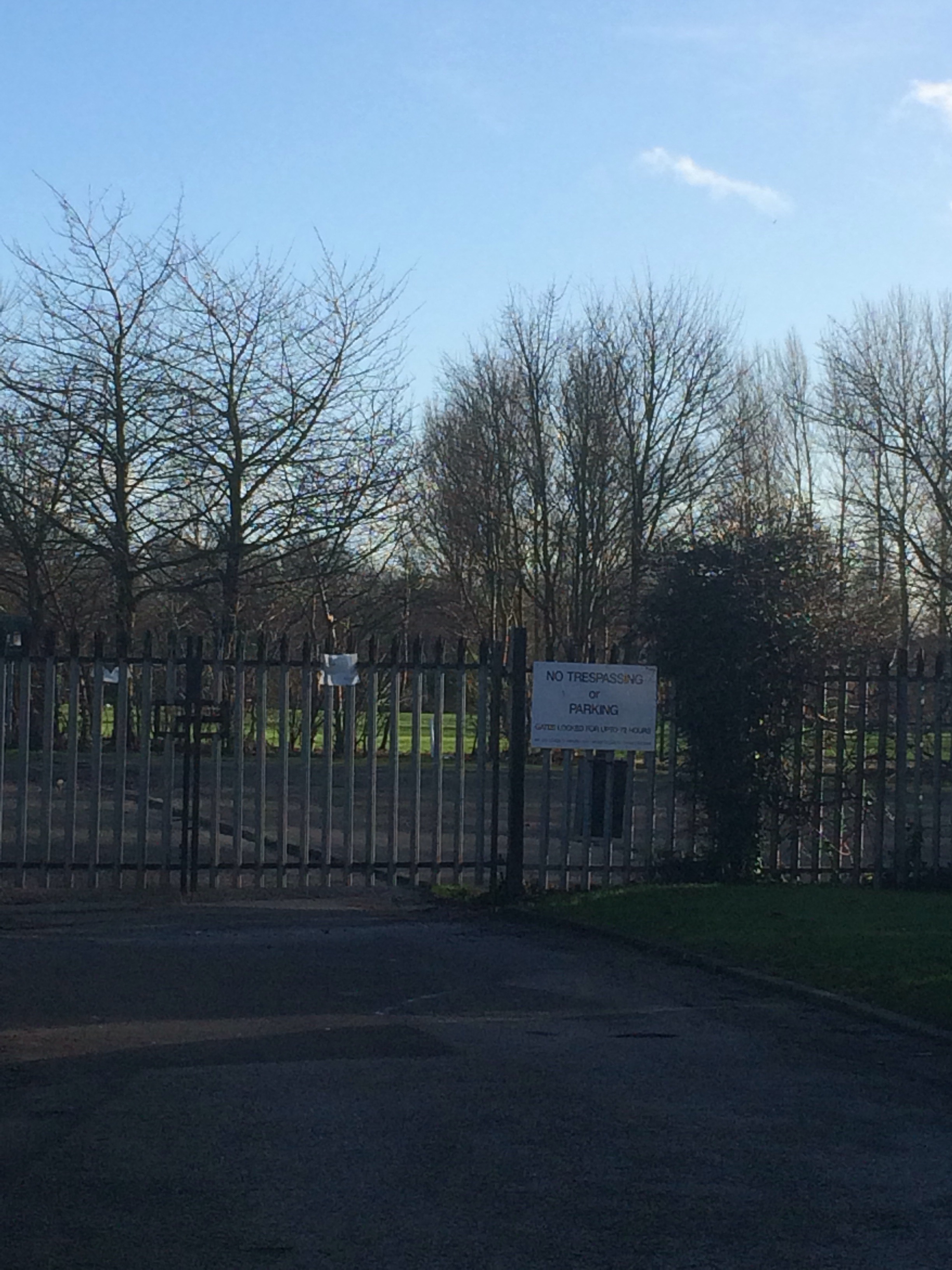
    I found this. 

      
    What was once a free space for all is now out of bounds – prohibited to us ‘trespassers.’ 

    You may think I’m overreacting but I find this incredibly sad and such a negative sign for the future. 

    Life isn’t like it used to be. I’ve noticed that. If we are cutting off access to spaces of nature we may as well give up caring about the environment altogether and just let the fields be used for paying football teams and so on or sold to estate agencies. 

    But Mother Nature won’t thrive on money. She thrives on care and attention and life from those who enjoy being in and looking after her spaces. 

    I’ve contacted Walsall’s local MP but no action has been taken. Perhaps they cannot see how their decision to cut off an area because of a few yobs is impacting an entire community.

    We don’t have many green spaces it’s true, so why not take care of and fight for the ones we do have? When generations to come ask us why our land is filled with only buildings and roads we will only have ourselves to blame. 

    Love nature. Love our spaces. No matter how small. 

  •   
    Earlier this year I was invited down to the See Hear studios in Bristol to feature on a panel discussing art forms in the deaf community. 

    Representing the sign song corner, I was asked to explain why the genre should be considered part of deaf culture and asked my view on the increasing sign song appearances in mainstream music videos. 

    Joining me on the panel were John Wilson – a BSL poet- and Ace Mahbaz – a Visual Vernacular performer. 

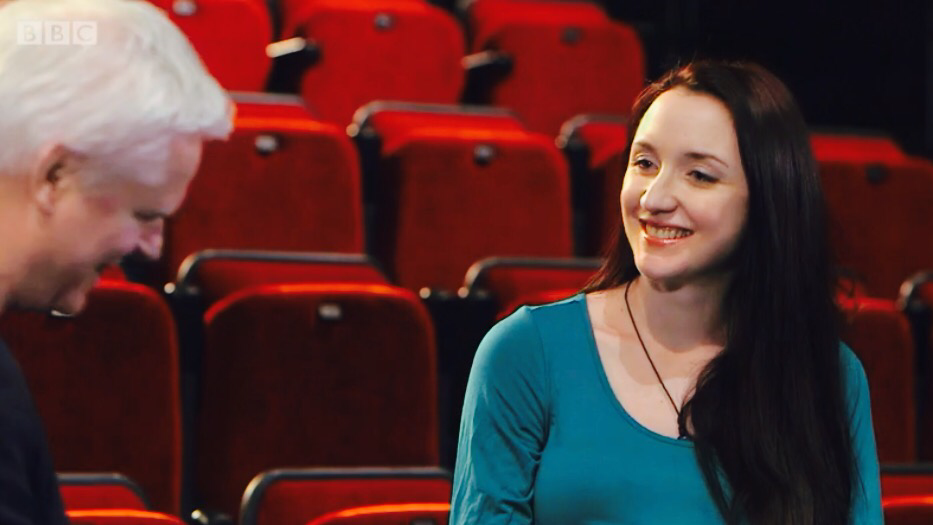
    The whole episode can be viewed here: http://www.bbc.co.uk/iplayer/episode/b06p174j/see-hear-series-35-11-deaf-visual-performance and the still image above is of myself with the presenter, Clive Mason. 

    I hope you enjoy it 😊

  •   
    I’m an holistic practitioner and I’m also deaf. But are mainstream holistic, mind body spirit events truly accessible to the deaf community?
    My answer is… No. 

    Like most situations in life, if I want to access something I have to go out my way to ask for what it is I need. And I had a taste of poor accessibility recently when I visited the Mind Body Spirit (MBS) exhibition in Birmingham. 

    Now, if you’re deaf and attending this event you can purchase a concessionary ticket. This means you get two quid knocked off to make up for the hundreds of stall holders that you can’t understand and the free stage performances that you can’t follow. 

    Not such a great deal. 

    But I went with it. ‘Cause I know most stall holders will generally try and speak more clearly to me if I ask and to be honest I just really, really wanted to go anyway. It’s my kinda world. 

    So this year I decided to gather a group of friends together and see if the organisers would provide an interpreter for us to attend a workshop. The great news is they did! The interpreter came and our seats were reserved… Perfect. Big high five to the MBS organisers. 

    But we soon realised that the so called ‘up and coming workshop leader, known for his sense of fun and rock and roll energy’ was simply not interested in being deaf friendly. At all. 

    To clarify, the guy was supposed to be teaching a workshop on strengthening our connection to Angels. Sounds amazing right? Well, that’s why we went – we were curious! 

    But it actually turned out to be a 2 hour – no eye break – talk all about his life.

    He mentioned his website, his dvd coming out and his video blogs. And naturally I wanted to know if we could access them. So at the end when he asked if there were questions and there was a pretty awkward silence (probably from an unconvinced audience,) I put this question across to him. 

    “Seeing as you have videos and material online, are you able to caption these so we can follow and share them with the deaf community too?”

    His response: “Erm. I’ll have to research it. Okay everybody we’ve finished.”

    Boom. Talk about a door slamming in my face. 

    Without even entering a dialogue with us, this guy had dismissed the idea of even opening up to a whole new audience. 

    But as he wasn’t even able to discuss accessibility with us, we doubt it’ll even get ‘researched.’ 

    The interpreter went on to tell us that the leader would not cooperate with her before the workshop, refusing to give her any background information for the session.

    He didn’t understand she needed some context to base her signs on and he told her “if these deaf people know about spirituality they will understand me.” Hmm. 

    Needless to say we left the workshop feeling rather disheartened. His lack of authenticity as a workshop leader is another story but our deal is with his refusal to consider adapting his work. 

    So – Ive got in touch with his publisher, Hayhouse, and I’m waiting to hear whether they will support the mission to make the holistic world more accessible.

    All they need to do is encourage their writers and leaders to caption their videos! Sign language videos would be the next step but first things first. 

    There are 10 million people in the UK with some kind of hearing loss – that’s a huge market and a massive demand. 

    But making events like MBS accessible is a bit tricky. Unless there’s masses of deaf people making themselves known, access won’t ever be a priority. And unless they provide access, they won’t ever attract a large deaf audience. 

    So I made a petition. I’m petitioning to Hayhouse, the leading publisher in all things holistic and asking them to work with us. 

    The ironic thing is the holistic model focuses on the whole body mind and spirit for healing… But holistic practitioners don’t always welcome the whole community – as Mr Workshop Leader demonstrated. 

    I know there’s more open minded teachers out there and all we need is one leader or one publisher to commit to including us. 

    If they can translate your books into 52 languages why not include a local community that can also benefit from your work? 

    Yoga, meditation, crystals, nutrition, reflexology… The holistic options are endless. But they’re only options to us if we can access them. 

    I’ll keep you updated on any developments so keep your eye on my social media pages and watch this space! 

    In the meantime you can sign and share the petition here. 

    www.thepetitionsite.com/777/916/112 

    Thanks for your support.