•   

    The last time I had an extended break from the digital world I was on retreat completing my mindfulness training and had been asked to switch off from as many outside sources as I could.

    Aside from missing texting my friends and family I found this surprisingly easy. My mind was free from mental clutter and this feeling of simplicity and ease positively affected so many areas of my life. 

    Returning home I returned to texting but I no longer read daily newspapers or watched the doom and gloom of news channels. And most dramatically of all I deactivated all social media. 

    I continued like this for quite a few years until I moved to a brand new area and had children…

    I suddenly felt (in the middle of a night feed) extremely excluded from the world. As a new mum my social life was dwindling and I felt out of touch. So I made the monumental decision to make my online return. 

    It’s been a couple of years now that I’ve been a Facebook and Twitter user. But lately I felt increasingly bothered by the amount of time I spent online so I decided to take a month off to pause and reflect. 

    That month is now up. 

    During my mindful month I soon realised that the digital world is no substitute for the real one. Over my month offline I noticed the real friends that would directly text me and the gazillions of facebook ‘friends’ who did not. 

    I also noticed how less distracted I felt and more able to sit, connect with my children and not drift off into a virtual world. 

    I admit that motherhood can get lonely but rather than browse my Twitter feed for company I’ve felt the benefit of getting out and seeing people more and having FaceTime chats with friends. 

    Ive used my time more constructively to read, write, be inspired and immers myself in subjects that I love and engage me. 

    Browsing newsfeeds just seems meaningless in comparison. 

    That said, I do understand how invaluable a social presence is for work. It’s a quick, easy and direct way to connect to people and tell them what you’re up to. You can also be inspired by other people’s work, follow what they do and build up a network of like minded individuals. 

    It’s also great at contacting or keeping in touch with friends who live miles away or who’s only source of contact is through online messaging. 

    So in that respect social media is brilliant. 

    But like the workings of the mind, it’s only good if it doesn’t consume you. And as ive got a sensitive make up that’s easily drained by too much stimulation, social media really isn’t all that good for me. 

    Mindfulness says that the mind is like a chattering monkey and in that respect social media can be too. A constant yap yap stream of consciousness that you have to filter out to see what’s important and what’s not. 

    Problems only arise when it seems you cannot switch off. When you’re addicted to or influenced your thoughts in much the same way you can become obsessed with or driven by social media, it feels as though you have no control. 

    The urge to log in, tweet, update or check statuses can become so ingrained that you forget what life was like before it. 

    You can also become stuck in a certain way of thinking that you forget what  you were like before. 

    That is why I’m an advocate of time outs from social media and of mindfulness meditation. 

    Too much of anything is never good for us. We develop itchy fingers, unable to sit still without reaching for our mobiles or some sort of screen to occupy our thoughts. What are we so afraid of? What gap are we trying to fill? Just what are we searching for? 

    Social media wasn’t the answer to making new friends in a new area. It was getting out and seeing people. Being online doesn’t even mean that the people I connect to digitally are authentic buddies so I’ll take our casual friendships with a pinch of salt.

    All in all, I don’t want to be a slave to the digital world, addicted to its activities and compulsions. I may use social platforms occasionally but they won’t use me. 

    If this makes me seem different, old fashioned or introverted then so be it. As a mindful practitioner I practice what I preach. And the best way I can do that is by noticing what drags me into mindlessness, writing about it and taking steps to change it. 

    By regularly logging off it may mean I’m left alone with my thoughts and the present moment – but that’s not so scary. It leaves me more quality time with my family. And hey, I’ll take that over a hundred facebook likes any day 😉

  •   
    I see metaphors in movies all the time. And my movie of the moment is none other than Divergent. 

    In case you haven’t seen it, Divergent is based around the population being divided up into ‘factions.’ People living and working in specific factions have separate values, attitudes and ways of living. One group, for example are more concerned with knowledge and inventions; another spends their time assisting and supporting others. 

    As children grow up they are asked to select which faction they wish to devote their lives to. This may be a faction their parents do not belong to but is one where they feel most themselves. Tests are also designed to help individuals understand where they belong according to their strengths. 

    However – not everyone fits into one category. They have qualities that belong to several factions and so are unable to be completely pigeon holed in one group. These are… divergent. 

    Now, ive always felt as though I was a bit of a black sheep growing up, never able to commit to just one thing or fit in one world. The factions in my life growing up have been several. And the compartments just seem to grow. 

    There’s the hearing world. The music world. The dance world. The writing world. The deaf world. The motherhood world. The holistic world. I could go on and on…

    And looking back I know I used to struggle with this. ‘Why cant I choose just one career path?’ I would agonise at university. ‘Why don’t I feel the same as all the other people at the deaf club?’ I wondered as a young girl. 

    And the answers simple. I’m divergent. Now I may not be Shailene Woodley but I know that I’m far more than just an ‘inbetweener’ straddling the deaf and hearing worlds simultaneously. 

    I’m the product of my upbringing but also of my interests, my skills and my passions. 

    This is why I’m so much more than just my deafness. And why I’ll never get on with hearing people that can’t see past that. But I’m not your typical deaf person either and I can’t apologise for that. 

    I may prefer to speak at certain times and sign at others. I may need to disappear into an holistic retreat some weekends and dance joyously on stage on others. 

    My differences don’t make me dangerous, as the films tag line suggests. But they do indeed make me me.  

    How about you. Are there other divergents out there? 

  • Walking into Paradise Wildlife Park in Hertfordshire, I have absolutely no idea what to expect. I’ve been too busy to look it up properly on the Internet and my hands are way too occupied right now to grab a detailed map of the park. So I decide to just wander around and see what we can find. 

    In the beginning it looks like pretty much any zoo or wildlife place. Until, of course, we stumble upon the lion enclosure. There is a path all around the lions which we follow until we come to a small crowd gathering. Turning to see what has their attention, we see a magnificent white lion feeding from the hands of a visitor. Yes, a white lion.  

      
    Everything about it exudes power and beauty. It isn’t any wonder this visitor has paid for this intimate experience and that so many have stopped to watch – this is extraordinary. 

    Continuing to follow the path around we come to some glass panels and a couple of lionesses move towards us.  They embody grace and power all in one. Edging closer to the panel they appear to look at me in the eye. A shiver runs through me. I have no idea why I feel the way I do  but boy do I have goosebumps…

    Even after we leave this part of the park and traipse over to see the camels, wolves and alligators, the White lions remain on my mind. 

    One of the saddest things for me was discovering that they’ve been extinct in the wild since 1994. Man have purposely hunted them for too long the only way we can see them now is in a park such as this. Isn’t that a tragedy? 

    It reminded me of where I was in 1994. Back when I was at primary school and quite the little campaigner. I wrote poems and songs urging people to “save the rainforest” to “save the animals” and I even contacted the charity Greenpeace to ask what I could do to help. 

    Fast forward into 2015 and I’ve been way too busy of late to give the rainforest a second thought. And the same can be said of so many of us. We become too wrapped up in our safe, western lives that we forget the rainforest is responsible for pretty much everything we take for granted. 

    The earths oxygen. Rain patterns. Protecting us from the greenhouse effect. Keeping us alive basically. 

    I may be side tracking a little bit but as we cut down more of the rainforest it’s not only affecting us but it’s also causing more and more species (like lions) to become homeless and worse – extinct. 

    I won’t lecture you. All I will say is that ive been inspired. And if you’ve been touched in any way then there’s so many things you can do to help the cause. 

    Visit places like the Paradise Wildlife Park. Support their conservation efforts. Google search charities that focus on things you feel passionate about. Wake up to the contribution you are/not making on Earth. 

    It’s not just about giving money. But more simply reawakening to what really matters on planet Earth and being conscious of the actions we take to help or hinder it. 

    The indigenous tribes where the White Lions originate in the Timbavati region of South Africa refer to the lions as Star beings. In actual fact, the word Timbavati translates as ‘the place where the star lions came down.’ 

    This may be fact, it may be folklore but all in all it reminds me of the absolute respect those people have for Earths creatures. Something we would do well to remember too. Perhaps if we did, our rainforest wouldn’t be in the state they are now. 

    Let’s wake up. Let’s remember. 

    Www.savetherainforest.org 

    http://www.rainforestfoundation.org

    http://www.worldlandtrust.org 

    http://www.pwpark.com 

  • I’ve written about this before… the choice of words medical professionals use when discussing deafness and the impact it has on those who are already deaf. 

    Yet it seems to be a recurring theme for me lately, with inappropriate comments becoming increasingly prevalent. So my time discussing this topic is not quite over. 

    A couple of weeks ago I was minding my own business at a soft play centre with my children when a lady approached me. She was a regular there and simply wanted to say hello. She soon realised I was deaf. 

    To her credit she didn’t scarper but sat down beside me to continue the conversation. But what followed were a string of awkward statements and questions that led me to think there are way too many assumptions about deafness. 

    She raised her voice and spoke in the direction of my ears, indicating her elderly Father was the same. She said it must be terribly hard for me but at least it wasn’t as bad as being blind (!) 

    She then asked about my son and when I told her he was hearing she responded overly pleased for me, “oh that’s brilliant!” 

    I tried to tell her that it wouldn’t matter if he was deaf as having deaf parents and there being such a large deaf community where we live it wouldn’t be seen as a negative thing. But her face drew a blank. 

    And that’s not the first time this has happened. I often meet new mums at play groups and a lot of the time they seem fascinated by my deafness and desperate to know if my children are the same.

    They respond far too positively for my liking if I say they can hear. It’s kind of offensive to me. Would it be quite so bad if they were deaf? 

    Yet of course deafness would seem like such a catastrophe to them, they’re hearing and have never known anything different. They only see the things we can’t do like, erm, hear! 

    They don’t see the cultural significance, the language, the community we belong to. They frankly have no idea. And it isn’t a surprise. 

    Not when audiologists send out letters like this to mums with new babies, urging them to get their hearing assessed to rule out any permanent hearing impairment. 

      
    Of course it’s better to know if your child is deaf and to be prepared but the phrasing of that sentence is just doom and gloom. 

    Rule it out? – like its something to be feared. Impairment? What happens if parents discover their child does have some kind of deafness? They can’t rule it out and their child is now ‘impaired.’ They’ll feel like the worst parents in the world with no positive prospects for their poor deaf child. 

    This is where my loyalty to my deafness comes in. I refuse to be ashamed of it or see myself as unable to achieve because of it and I feel very protective towards any parent offered apologies or sympathy simply for having a child who is deaf. 

    So if there are any parents out there who have recently discovered their child has a deafness, I’m speaking to you now.

    Your child’s deafness does not summarise your whole child. It’s a quirk they’ll have, a characteristic that shapes them and makes them who they are. You’ll get to know them as they grow and form your own way of communicating whether that’s with speech, sign or both. 

    It’s your child. Don’t let anyone make you feel bad and most definitely do not accept strangers ‘sympathy.’ If they say sorry – ask them what for? You have a beautiful child whose senses are going to be marvellously heightened, they will have a unique way of seeing the world and most definitely will not be excluded from it. 

    There will be challenges – that’s life. But take it from me, deafness is not the end of the world. They will still live, love, laugh and its up to you to show them that it’s okay to be different, it’s okay to stand out. Everything happens for a reason. So give it time and you’ll discover yours. 

    I know that without my deafness I wouldn’t be half as resilient or determined and I would never have achieved all of the things I have. I wouldn’t be quite so open minded or accepting of people’s differences or disabilities because I know first hand that behind appearances we are all the same. 

    Audiologists, professionals or just general hearing people haven’t had the life experience with deafness that I have. They see it on an audiogram and view it as an impairment, something we’ve lost. Yet I and the deaf community refuse to dwell on what we don’t have and instead we celebrate what we do. 

    This is what separates the medical model from the cultural model of deafness. It’s all about perspective. We could sit around saying its hard and see ourselves as impaired and therefore unable to do anything worthwhile with our life. Or we can grab life by the horns, accept our deafness and the unique view it gives us and just enjoy our days. 

    We are all different in one way or another. And we don’t need anyone trying to make us feel less than or as though we’re a sufferer. Life deals you a hand and you deal with it. 

    So if people speak of deafness as a terrible, terrible thing, I say let them. If they panic at the prospect of your child being deaf and try helplessly to “correct it” I say leave them be. 

    I refuse to waste any more energy assuring people that actually being deaf isn’t quite so bad. That it doesn’t mean I have “bad ears” or “less than satisfactory hearing. ” Or that I’m a bad or less than satisfactory person. 

    Instead, I’m just going to show them.  After all it’s true that actions speak louder than words. They will see as I live my life that I’m here and I’m deaf and its okay. 

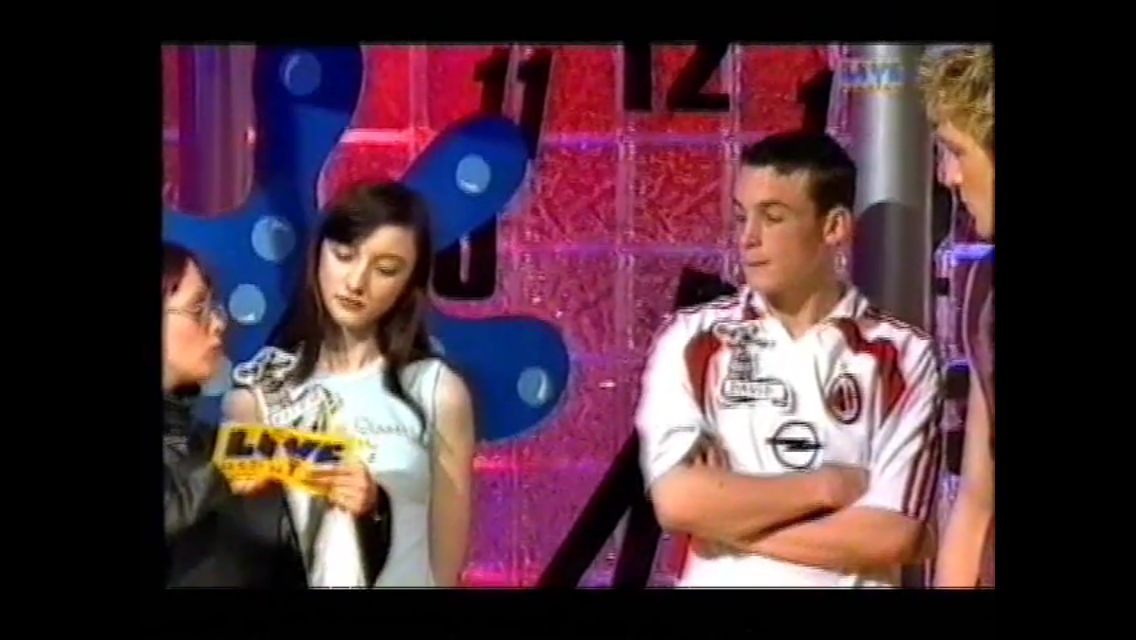
  • For most people, the first time they saw me on their TV screens was during my time as an actress on Grange Hill between 2005-2007. But in actual truth, I’d dipped my toe in the pool of television back in 2000 when I was 14 years old. 

      
    I’d won an online quest to appear on BBC 1’s Live and Kicking, answering questions about my favourite band the A*Teens in an attempt to meet them and avoid the gunge tank! 

    To cut a long story short, I won it. I met the A*Teens as well as boyband Blue (who were unheard of at the time) and returned to Walsall from the Glasgow studio that day with tons of amazing goodies. I should have been thrilled right?! 

    Well… As much as I loved the day, I remember feeling incredibly disappointed when it was all over and even more disheartened when I dwelled on how I’d never be a singing dancing popstar like the ones I had met. 

    You see, I was in that awkward teenage stage of not quite knowing who I was or how I fitted into the world. I still went by the name of Beckie (as you can see on my name tag) and despite my formal, confident appearance, inside I was a bundle of nerves.  Mostly due to my deafness. 

    This was live TV after all. So there were no rehearsals, no repeats and no way of me being able to guess what anyone was going to say. Cue lots of intense lipreading and serious stares. 

      
    The cameras were directed in such a way that the audience didn’t notice the presenter Sarah Cawood holding my hearing aid each time I stepped into the gunge tank but you do see her show me the question card when the other presenter speaks with his back to me. 

      
    I noticed how back then I appeared overly formal, strong, confident and mature for my age. Standoffish almost. This was most probably due to the front I felt I had to put on to get by in a hearing world. I didn’t want any sympathy and I most definitely didn’t want to appear weak. 

    Even the singers in the band were fascinated by the fact I was deaf because I didn’t “look it.” They probably wondered how I enjoyed their music and so it was pretty ironic to them that out of all the thousands that applied, a deaf girl won it. Go me.
    Watching the video back, aside from asking the presenter to repeat one question, I did a pretty good job of “looking hearing.” I spoke, I responded, I lipread. And I guessed and bluffed my way through the conversation backstage with the Swedish stars too. 

    Apparently I was asked by one of them if I was from Glasgow – but her Swedish accent meant I couldn’t understand her and back then I was too embarrassed to ask again. So I just said yes. Cringe. 

    So on the 4 hour train journey home I promised myself that this would just be the beginning. That despite being deaf and feeling SO different I would most definitely have a career in performance, no matter what. 

    And now over ten years on, I can say I’ve achieved that. But this time, I’m not pretending, I’m not acting “hearing” or covering anything up. I speak and I sign and if I dont understand Ill always make it clear. 

    I’m being me. And that is good enough indeed. 


  •   
    When I was a child, my father told me ‘you can do anything you want to.’

    Its only when you grow up and step back from him;or leave him for your own home; its only then that you can measure his greatness and fully appreciate it.

    My father gave me the greatest gift anyone could give another person, he believed in me.

    Not only that, but my Father was the one I would turn to in times of upset, confusion or sadness during the rocky teenage years. His calm, wise words would soothe my anxious spirit and his grounded nature inspired security and faith in me too. 

    Throughout my career as a performer,  my father has always been there, supporting and encouraging me to be the best I can be and to always make the most of what I have. 

    Our shared love for music and lyrics has meant we have always been close yet I have never dedicated a performance to my father – until now. 

    I chose this song as it tells the tale of a father who ultimately provides nothing but comfort and reassurance to his child. Just like my Dad always did and still does to me. 

    So here you are Dad, this ones for you. 

    Thanks for everything

    http://youtu.be/XBBq3GXPqgc

  • The greatest gift I can give to you is my presence.

    You aren’t fussed for gifts or fancy things

    You just want mummy to watch, help and live life beside you. 

    That’s why I promise you this.

    I’m alert and I’m here

    Every step of the way

    Through the hard times and tears

    I will hold and protect you 

    And I will share all of the delights of the world with you.

    For my greatest wish in life is to be present for all of our moments together

    That way there’ll be no regrets no sadness no nostalgia

    For I’ll know I was with you anyway. 

    We’ve come this far together

    And wherever we go I will be there. 

    In body, mind and spirit. 

  • The Buddha explains whenever we experience pain in life we are being hit by a metaphysical arrow. This may be an arrow of illness, grief, injury, a mental or physical ailment. It’s a situation, circumstance or something that has just “happened.” 

    However, following this first arrow we usually find ourselves being hit by a second arrow: which represents our emotional and mental response to whatever’s happened. This is where the real suffering lies. 
    It’s the reaction we give to the illness, injury, accident or so on that causes our suffering. It’s our internal dialogue that questions despairingly “why has this happened to me?” and tries every which way to get out of it. It’s our resistance to whatever has happened or is happening that causes so much discomfort. 
    It is perfectly natural in certain situations to feel intense emotion and therefore to “suffer.” But there are also other times when our suffering becomes a self inflicted habit. This happens when we become so used to thinking negatively about ourself and the world around us. 
    I was reminded of this when I came across a book recommended through the Mindful Everyday site, “At last a life” by Paul David. The author, who has recovered from ten years of severe anxiety, explains how once he stopped fighting his condition he found himself well and truly on the way to recovery. 
    To clarify, anxiety sufferers, through no fault of their own, often become stuck in a cycle of fear and anxiety because of their obsessive worries and tendency to focus so much on how they are feeling. Simply by ruminating about their anxiety and their battle with it they become trapped in a world of their own, silently fighting their demons and unable to reach out to the world around them. 
    Paul David’s advice is simple but immensely wise. The trick – he says -is not to fight the anxiety whenever it arises but to notice it and move our attention away from it. We therefore begin to believe it’s not such a big deal when anxiety arises and we realise our thoughts are only thoughts. They’re not facts and they can’t harm us – no matter what we’ve previously been telling ourselves. 
    By explaining what anxiety is and how it works, David takes away anxiety’s power and reminds the reader that it’s time for them to reclaim their lives once again; hiding away from the world until you “feel better again” is never going to work. 
    In short, what I love about David’s writing is how much he is endorsing not just a change in behaviour but also a change in attitude. By encouraging anxiety sufferers to no longer be afraid of their symptoms he is actually teaching them to no longer hurt themselves with the second arrow that the Buddha refers to. 
    For it is always the emotional and mental response to the ailment that causes us so much suffering, and not -ironically- the ailment itself. Learning to detach from negative self talk and cultivating a calmer attitude towards the symptoms are the best and bravest things you can do to begin to recover from anxiety. 
    This can be applied to many things in life. Chronic pain, illness, loss and tragedy can all be accepted and moved through gracefully if we no longer torment ourselves with fearful, negative thoughts. We can move away from the victim mind set and reclaim our power once again. 
    One last thing to remember in regards to anxiety is that we cannot think our way out of a problem that was caused by thinking in the first place. This is where the mindful wisdom of moving out of our heads and back into our bodies comes into play too. 
    So once we give up the mental battle of fighting or resisting our circumstance, we open up to a world of possibility and potential to change.  

  • Ted Evans’ award winning short film, The End, poses the question, ‘if there was a cure for deafness, would you take it?’ 

    In its raw, documentary style The End explores what could indeed happen if deafness was eventually eradicated.

    For those of you with hearing or with no exposure to the deaf community, saying ‘yes’ to a cure for deafness would most likely seem an automatic response. 

    But for those who are well and truly part of the deaf world, the prospect of eliminating deafness would signify a loss rather than a gain. 

    The existence of sign language, deaf humour and rich artistic expressivity would all cease without the deaf community that gives life to them.

    For this community, deafness is seen not so much as a dis-ability but rather an ability to converse in a unique language and enjoy the perks of living in a much quieter world. To them, deafness has many gifts.

    I have known deaf artists say it is actually their deafness that enables them to be so successfully creative. 

    Deaf writers have expressed how it was their deafness that encouraged them to seek wider platforms for their ‘voice.’ 

    Even I, as a dancer, have noticed how my sense of rhythm and musicality is stronger than most – and yes, I am deaf! 

    Countless deaf professionals have all said it is because of their deafness that they have succeeded and not despite of it. So without it, who would they be?

    This is perhaps why charities that focus on ‘curing’ deafness are often shunned by the deaf community. Offering a cure, however well-meaning it may be, could be read as:

    “You are not normal.

    We want to fix you.” 

    By emphasising what is lacking or medically lost, is it any wonder the deaf community may feel inadequate when viewed from a medical perspective?

    Yet as a friend of mine likes to point out, what is normal anyway? 

    Without our variations and differences the world would be a very uniform and uninspiring place.

    Going back to question, to say that I would meet the offer of a cure with an immediate ‘no’ would be a lie. I was not born deaf; therefore I know exactly what I am missing. And even with all the perks of not hearing, there are times I really do miss music…

    For myself I have concluded – should a cure ever be invented, much further consideration would have to be given. It’s simply not as easy as yes or no.

    And so congratulations must be given to Mr Evans who, with his thought provoking and poignant film, has encouraged deaf people worldwide to seriously consider The Big Question…

    “Would you?”

  • It seems whenever I meet with a female friend it isn’t long before our conversation turns to that of the opposite sex. Men are indeed fascinating!

    But as a dear buddy of mine recently anguished, ‘how can you really know what men are thinking?’

    Such strange yet marvellous creatures they are, males tend not to say what’s on their minds nor do they like to talk about *ahem* feelings.

    The men in my friend’s life have behaved particularly bizarrely. Hot then cold, eager then laidback, they are almost like true to life Danny Zuko’s; really keen on her but not so hot at showing it. 

    Even their text messages are confusing. Ending with the likes of “I’ll be fine” and “Don’t worry about me,” it seems that they want her to be there, but are too scared to ask for what they need. 

    Another question, of course, is how do you know if you’ve begun to cross the line from ‘just friends’ and wandered into the realm of  â€˜something more’ ? 

    Should you put your cards on the table, confess how you feel and risk them running a mile? 

    Or wait for a sign that hints they feel the same way, which could very possibly leave you waiting forever?

    Well I say, do as Derren Brown would do! Begin to read between the lines, pick up on their vibes, and really see what feels right. And hey, if you make a mistake or do something regretful you can always blame your hormones!

    The truth of the matter is we can’t change men’s nature any more than we can our own. By default, we like to talk. We take things to heart, we overanalyse  conversations and yes, we stress over how many kisses we should really end our texts with.  

    But men don’t do that, do they? Or do they?

    How do you know?! 

    I have a feeling this month is going to be rather philosophical…!