• As the seasons blend from one to the other, with days getting shorter and nights getting longer, it’s natural to notice differences in our moods and mental wellbeing.

    Whilst it can be comforting and exciting to look forward to certain holidays throughout the autumn and winter, there’s no disputing the fact that dark days and cold nights can have a direct effect on how we are feeling.

    A friend of mine particularly struggles with the winter months, reporting that she often suffers with a depressive mood and general anxiety due to the low light levels and climate changes.

    From a mindfulness perspective, all states of mind and mood are simply like clouds passing through. The sky can get very dark from time to time, perhaps even stormy. But it is reassuring to know it doesn’t stay the same consistently. Even with conditions such as anxiety or depression you may notice times where the symptoms fade in intensity.

    One way to practice mindfulness to support your mental wellbeing is to purposely cultivate a mindset which doesn’t resist whatever emotion is being felt. Here you allow yourself to feel whatever you feel without judgement or needing to argue/defend/resist/push away from those feelings. You let the emotions be.

    Writer and spiritual teacher, Eckhart Tolle, refers to this as being able to say ‘yes’ to whatever the present moment brings. It doesn’t mean that you’re allowing a dark mood to take control of your life. It simply means you quit swimming against the tide. You stop fighting with it. This frees up so much more energy for you to use.

    By allowing a dark or anxious mood to simply be, you create space around it. It’s in this space that you can observe it, notice its pattern and see how it fluctuates. It then begins to loosen its grip on you.

    Eckhart Tolle describes doing so as ‘becoming the one who watches.’ By sitting back from your emotions you can live your life whilst gently being aware of however you feel. Resting in the knowledge that the feeling won’t last and giving it space to pass.

    If a low or anxious mood should arise, be sure to watch out for any sort of rumination that it triggers in the mind. Look out for those mental stories which cry in despair ‘this isn’t fair, woe is me, why does this always happen to me, my life is dreadful…’ and so on. Notice these thoughts, don’t argue with them or try to change the statements. Your awareness is all you need.

    Remember, the contents of your mind aren’t always true. More often than not, the mind can be easily critical or quick to complain. Mindfulness allows us to notice what our own personal mental downfalls are and as we watch them objectively, we begin to break away from the ingrained habits.

    As well as being gentle and easy on your mind this autumn and winter, you can also make time to practice simply being with yourself. I personally love the ‘Hygge’ concept that originated in Denmark. It involves setting aside time to cultivate cosy and nurturing habits and living a life of simplicity.

    You can find out more about what Hygge (pronounced Hue-ga) is on this lovely website here: https://hyggehouse.com/hygge

    Practising hygge – to me – feels like a natural mindful practice. The hygge activity could be as simple as sitting in your favourite chair, curled up with a blanket, sipping a hot drink and allowing yourself to be. No errands to run, no jobs to do, just sitting and enjoying your drink.

    What are your favourite ways to evoke feelings of nurture, warmth and cosiness? Long, leisurely baths? Cake and conversation with a friend? Listening to music? If you do notice a trend of struggling with your mental health during autumn and winter, why not look into creating a simple mindfulness practice for yourself, with all the gorgeous Hygge feels?

    Combining mindful awareness with a hygge lifestyle is what I personally use to enrich and soothe my own mental wellbeing. As someone who has experienced Seasonal Affective Disorder in the past, I know only too well how important it is to have a mindful practice in place and to have compassion and patience with yourself when things feel particularly tough.

    If you need any support on your journey, feel free to get in touch! I offer a range of mindfulness meditation videos (in British Sign Language and with English captions.)

    The meditations I currently offer are:
    *The Breathing Space – finding ways to take a breather in busy lives
    *Love and Kindness – nurturing feelings of self care, love and forgiveness
    *The Body Scan meditation – grounding into the body to calm and soothe.

    If you need support with something else I’ve not stated, please get in touch to enquire. To purchase any one of the video downloads or to book a personal session please get in touch with me via the contact page.

    Take care. Love,

    Rebecca x

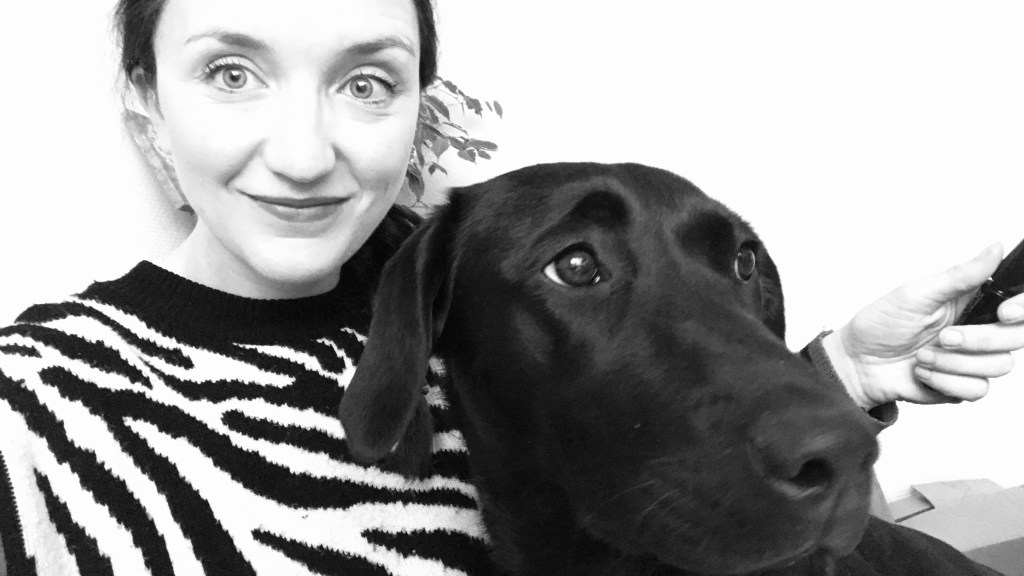
    Me and my ‘hygge’ lovely Luna

  • I’d like to explain – in my words- what mindfulness is really about. For too many people, they get lost in the jargon and fancy words when really, it’s not at all complicated. Mindfulness is actually very simple. It’s just we’ve gotten so used to mindlessness.

    Living mindlessly – the opposite to being mindful – is like living with a constant automatic commentary playing in your head. You may not be aware that it’s there directing every thought and influencing every feeling that you have. Therefore you believe every word it says, without question.

    But – as mindfulness makes clear – our problems in life really begin when we get too lost in the stories our mind tells us and therefore spend way too much time in our heads.

    We form opinions about anything and everything. We categorise people and situations as being ‘good’ or ‘bad.’ There’s hardly ever any in between. It’s not very often we remain completely neutral about something.

    As a result, our emotions and thoughts exhaust us before our bodies do. And when our minds spin out of control, our bodies usually follow.

    Let me use an analogy to explain my point further… Say you’re watching a football match on the television. There’s actually two things going on. There’s the football match that’s happening. And then there’s the commentary taking place on top of it.

    The football match just ‘is.’ The ball moves. The players run. Goals get scored or goals get missed – whatever. A toddler watching a match taking place would likely not have an opinion about the people playing or the outcome of the match, it’s just an event that’s unfolding.

    The commentator on the other hand, reels off thoughts and judgements about what’s taking place. The match is deemed great, awful, exciting or boring. The commentator’s mood often changes throughout the course of the match and the outcome of the match has a significant effect on how the commentator feels.

    After the match has finished the commentator will often engage in discussions about the match, analysing and contemplating what could have been done differently. There may be mentions of ‘what ifs’ or ‘if only!’

    Having this constant stream of thoughts is very normal. But for the most part, too many of us take our thoughts as being facts – and they are often unquestionably assumed as being the Absolute. Truth! But if your mind is feeding you negative or critical thoughts then this commentary can actually be downright harmful.

    The example I’m using of the commentator is merely to point out that you have the same sort of voice in your head, living all of your life experiences with you. This is your mind.

    The minds commentary will feel good when life is good and the ‘voice of opinion’ is in approval with what’s happening. But throw in a life changing event or a change to your normal routine, and see what happens. Does your mind stay calm and centred or does it get thrown about in a sea of thoughts and opinions?

    Living in your head, to put it bluntly, is just plain exhausting. If we learn to form opinions about every single thing, mentally resist all the things that we ‘don’t like’ and strive towards or compare ourselves to things that we do ‘like’ – when can we ever experience real peace and quiet, and thus get a decent mental break?

    When is it okay to just be who we are, exactly as we are, in this exact place and time without something needing to be changed/improved/discussed/removed/recognised?!

    Even when going about with our daily life very rarely do we meet someone new and accept them completely at face value, like a young child would. The same thing happens when we encounter experiences or events.

    We like them. Or we don’t like them. We get lost in our feelings and thoughts about things rather than Just. Letting. Them. Be. Why do we have to have an opinion about every thing or person?!

    Living mindfully means engaging with that quiet, child like part of you once more. It’s noticing the world around you and observing those beside you too, without falling prey to mental stories.

    It’s being quiet enough inside to just see and feel life as it is. Right here and now. Being able to let go of the habitual constant thinking state and just Be is not only a useful relaxation tool but a vital skill for life. Constantly carrying around your thoughts and feelings about everything as you get older will eventually become too much a weight to carry.

    So why not choose to put the weight down from time to time. Take a breath. Let yourself feel the world around you. The wind on your skin. The earth beneath your feet. Look, no – really look – at your loved ones when they’re talking to you.

    Do something radical and choose to switch off from that constant chattering commentary. How? By tuning in to your physical senses instead. Look, listen, feel, taste, smell.

    Allow these tangible senses to ground you and let yourself soak up life in the here and now. Boy does it feel good.

    Mindfulness is simple, but not always easy as its opposite – mindlessness – has become an ingrained habit for so many of us. But you can choose to break free from the same old patterns of thought.

    Just watch. Notice. See where your mind usually takes you. Notice the stories you often tell yourself.

    Then offer yourself the mental space you need by practising what humans were meant to be for in the first place… being.

    So my final question to you… I know you know how to do a lot of stuff. It’s impressive, truly. But do you know how to be?

  • When my then two year old deaf daughter was attending playgroups, so many people noted how fluently she signed.
    “It’s because she’s deaf,” they told each other, nodding heads.
    And when I expressed my concern that she could only vocalise one vowel sound and had zero lip pattern, they came to the same conclusion;
    “It’s because she’s deaf! All deaf children have a speech delay, that’s why they have speech therapy!”

    But I knew different. Call it a hunch, Mother’s instinct, or part of being deaf myself.
    The fact that our little girl couldn’t imitate lip pattern or shapes with her mouth screamed out at me that there was something different, and something entirely separate to her deafness going on.

    At that time we weren’t entitled to any support from a Teacher of the Deaf as our daughter only had one sided deafness. So I went to our GP. Straight away we were referred to a speech and language team and met our speech therapist.
    After an initial assessment it was agreed that our daughter was eligible for therapy and we were given six week blocks, a format similar to what an older deaf child would receive.

    Reflecting on the first few months of therapy, most of it consisted of our little girl signing and echoing vowel sounds “e,e,e” and “a,a,a.”

    Eventually we were granted the support of a Teacher of the Deaf and she herself commented how unusual our situation was considering our daughter had enough hearing in one ear to access every day sounds.
    Finally, it felt like others were slowly seeing what I could see… it’s not just because she’s deaf!

    The pivotal moment came for us in July this year – almost a year after we first sought help – we finally had a diagnosis.
    Verbal dyspraxia.

    I had previously heard of the term dyspraxia and foolishly assumed it meant physically clumsy or uncoordinated – which our little gymnast definitely wasn’t. But verbal dyspraxia is actually a neurological disorder in which the brain doesn’t automatically tell the mouth and the tongue how to form shapes or make sounds.
    It’s why our daughter failed to imitate lip patterns and would hum and chatter only in vowel sounds. Finally the puzzle pieces were coming together!

    With this new diagnosis, a new action plan was formed. Children with verbal dyspraxia require more frequent, intensive bursts of short therapy rather than longer sessions for blocks at a time.

    While most children hear sounds or see lip patterns and copy them instinctively, our little girl has had to break everything up and one letter at a time learn how to form shapes and make sounds with her mouth. The regular, shorter therapy sessions meant that her brain would most likely store these and use them again.

    We have been blessed to have a brilliant speech therapist who highly values BSL and is so knowledgeable about verbal dyspraxia. Our daughter sees her “talking” sessions as fun playtimes and she is so aware of the benefit the sessions bring.

    Our daughters desire to talk is actually one of the reasons we were insistent on getting help. Long before we had the verbal dyspraxia diagnosis, our daughter signed to us one night before bed. She said “I can’t talk. It’s too hard.” And she told us that she was “sad because her mouth didn’t work” and declared “I want to sing!”
    She knew she wanted to speak and could do so – but it was hard work. And thank GOODNESS we had BSL because without that there would’ve been no way for her to develop her expressive language. How frustrating it must be for children with verbal dyspraxia who don’t have sign language to express themselves.

    Fastforward to the present and our daughter has been at mainstream nursery for six weeks now. We have always been more worried about her verbal dyspraxia than her deafness in terms of how she would cope, but we couldn’t be more delighted with her progress.

    With regular therapy at home and at nursery, we’ve been astounded by the speed at which her confidence in speech has developed. She sang this morning to the Peppa Pig theme tune “pe-ppa Pig oink oink!” and I marvelled at how just a few months ago there was no way she could even piece a word together let alone sing a theme tune!
    She chats to her friends with sign and voice, and she even confidently stood up at Show and Tell and told the whole class about her toy cat!

    All we want is for our daughter to be a confident communicator – whether she chooses to do that in sign, speech or with both.

    Having the right diagnosis offers her more options, more opportunities and allows her to be understood for who she is – and not what textbooks say she should be.
    Being deaf myself I admit that it means some speech sounds – typically the ones I can’t hear – are harder for me to say. And some words I would never attempt at pronouncing! And so I understand where the generalisation regarding deafness and speech comes from.

    Yet we need to remind others to look at deaf children as individuals; so many factors can influence speech and language – not just deafness.

    Our daughters growing confidence in communication may not have been possible if she had kept been passed on as just another “typical deaf child with a speech delay.”
    I don’t believe there’s as such a thing as a typical deaf child. To do so is just to give rise to assumptions again and these are dangerous things that can really impact on a child’s life.

    If you’re a parent or family member and you think something additional to deafness is going on with a deaf child, trust your gut. Follow it up and refuse to let your child be pigeon holed.

    For more information on verbal dyspraxia see https://dyspraxiafoundation.org.uk/professionals/speech-language/


  • I’m not sure when exactly Jessica Kellgren-Fozard first popped up on my Twitter newsfeed, but it’s been a real delight getting to know her online work. Jessica is a YouTube presenter, who chats mostly about disability, deafness, the LGBTQ communities and vintage fashion – amongst other things. 

    In her own words she is a jolly lesbian version of a vintage Hollywood sweetheart. Which is a rather fabulous description, don’t your think? 😉

    She has over 300,000 subscribers to her YouTube channel, with a section of videos dedicated to deafness – topics covering why she doesn’t sound deaf; why she wears hearing aids and what she can’t hear… to name a few. 


    So what’s her story? Jessica was diagnosed with hereditary neuropathy with liability to pressure palsies (HNPP) and she also has a mixed connective tissue disorder (MCTD), an autoimmune disease in which the body’s defence system attacks itself. She had several operations on her ears as a child which meant from the age of 5-15 she could hear relatively well. When she realised she was losing her hearing as a teenager due to nerve damage she began to use hearing aids and later taught herself to sign. 

    As Jessica’s disabilities are mostly invisible she has received online hate messages regarding her not being “disabled enough.” She also speaks of her struggles being deaf and explains how the fact she has clear speech means she is often assumed to be a hearing person. 

    Despite this she lives with a positive, can-do attitude and uses her social media platform to educate and inform – in an engaging, gorgeous and humorous way. She says her disabilities and her deafness are just part of her and her videos are a great way to break down misconceptions and change peoples assumptions about what deafness and disability mean. 

    Binge-watching Jessica’s YouTube videos – which are all captioned, of course – I was really intrigued to find out more. So I got in touch 😊

    So, Jessica, was it always your intention to present / vlog? How did your YouTube channel come about? 


    I’d never felt represented in the general media so wanted to make videos about topics that were important to me but would also hopefully educate people who hadn’t thought about these issues before. Through my YouTube channel and Instagram account (including my joint account with my wife) I focus on disability and chronic illness awareness, deafness, lesbian relationships and vintage fashion and beauty.

    Some of our readers may recognise you – I remember seeing you on BBC3’s Britain’s Next Top Missing Model back in 2008-  What was your greatest moment on the show? What did it spur you on to do next? 


    I had great fun on the challenges, I really loved doing all the modelling. I also really loved the interviews, the 1 and 1 and being able to chat to camera. It probably spurred me to get help with my hearing and work even harder at my a-levels because I wanted to get a job with the BBC.
    You do have an incredible fashion style, so as a hearing aid wearer how have you adapted your hearing aids (if you have?!) to suit your style? 


    I actually haven’t in any way adapted my hearing aids but I make sure that they are always very neutral coloured because I like to coordinate colours in my outfits and my hearing aids have to match. Currently the type that I wear are really old, when I upgrade them next I want to get gold coloured ones! Because I like all my accessories to be gold and sparkly.
    Sparkly hearing aids – I love it! Talking of sparkly, Ive seen several of your BSL (Christmas) signed videos. What inspired you to do these and do you have any aspirations for further signed videos? 


    I think that signed songs are a really helpful easy way for people to pick up sign language vocabulary and specially fluency moving from one sign to another. I would personally love to sign a song with the YouTuber Dodie, we recently met at VidCon and she was so lovely! Plus her songs have beautiful lyrics.

    I’m aware you weren’t born deaf and so came to sign language later in life; how did you find that? 

    I actually use SSE, as I taught myself how to sign after my school was not able to provide any classes. They were quick to provide an interpreter, but not the lessons, which was… not that helpful. With the help of a sign language interpreter I was able to understand classes at University that I just hadn’t been able to previously, which changed the way I learned at uni!

    With your busy work and travel schedule what do you use or do to make things easier – communication wise? 

    Obviously I work with video which is a very visual medium but also uses a lot of audio, I edit my audio visually but sometimes that goes wrong. So I use the hearing people in my life as guinea pigs to test sound for me. Travelling by myself can be quite daunting especially in airpots where they announce things over the airpot tannoy. Due to my disabilities I’m largely unable to travel without assistance however and my hearing wife is great at keeping me informed. I use a sign language interpreter for all big events, interviews, business meetings etc.

    What is the biggest barrier (in your view) for deaf people in general? 

    Hearing people who don’t make the effort to aid communication. Like eating while I’m trying to lip-read, always gross.

    Agreed! Who are your inspirations or role models and why? 


    My grandmother has always been the biggest inspiration in my life, even tho she is no longer with us I always admire her efforts to understand and help everyone around her.

    What’s next for you? 

    I’m going to be a featured creator in Summer in the City next August in London, the UK’s largest YouTube and online video festival. I’m also working with BBC Radio 1 on a documentary about Deaf Youtubers together with Jazzy and Benny Ngo. This one doesn’t have a date as it’s in pre-production, but I’m very excited about it.
    It sounds exciting! We will keep our eyes peeled. Thanks for chatting, Jessica.

    To follow Jessica make sure you subscribe to her YouTube channel https://m.youtube.com/c/JessicaKellgrenFozard

    Check out her Instagram account too!  https://www.instagram.com/jessicaoutofthecloset/


  • Hi Chris! I’m excited to find out about your boutique, could you firstly tell us a little about yourself, your background and how you got into the fashion industry? 

    I first became interested in fashion after leaving school. I enrolled on a GNVQ course in fine art before then applying to the London College of Fashion, London University, to study BA in Men’s Fashion Design and moving to London to study. This is where i met Queesra when she was studying at the University of East London doing a BA in fashion design and marketing.I stayed in London for 5 years, completing my degree and then working in a bespoke Italian tailors called Nico Donna. I always had plans to start my own brand and Queesra (my wife) wanted to do the same. We both wanted to open our own tailors and dressmaking shop but decided we wanted to do it closer to home and so we both moved back to liverpool.

    Being deaf yourself, what were your challenges or worries about entering the business world and accessibility?  

    Of course Queesra and i have faced barriers, barriers to accessing the fashion community have always been around communication as it generally is for anybody who is Deaf. Getting an ATW budget approved as a self employed couple was a challenge but not one that we were going to give up on. There are times when we don’t have an interpreter because of ATW funding and not having enough ‘hours’ but we have learned to communicate with customers well and all of them have been very accepting of us, i can honestly say now we never have a problem. (We have even had a few customers who can sign!)
    Could you tell us an example of how you’ve overcome any barriers or stereotypes about being deaf and working in fashion? 

    While at university i had to find a placement as part of my course in the 2nd year of my degree. I sent off more than 100 CV’s to well known designers/tailors and only received 4 replies – i failed at all 4 interviews. I decided that i was going to do the same again without mentioning that i was deaf and I received over 20! I didn’t pursue any of them because it proved to me their attitude towards deafness. Instead I was put in touch with Nico Donna, an Italian suit designer/ tailor and after meeting him for the first time I knew we were going to get on. Because English was his second language he struggled with it just as i did and because of that (and because he was Italian) he was very visual and used lots of gestures to communicate. We got on so well and I learnt so much that he offered me my first job after I qualified!
    what support (if any) do you have for communication in your work?

     Well, currently there are 2 deaf staff working at the shop, myself and my wife Queesra. However, she will be leaving the shop soon to persue he own career in pastures new which means that the interpreting support we have will drop from 40 hours a week to 20! I am currently battling with ATW to grant me extra hours to enable me to continue to have the correct level of interpreting support in the shop. The team of Interpreters we have are great! They understand all the specific jargon and terminology for working in a tailoring and dressmaking shop and in the fashion industry and all of them are great with the customers and other staff. 
    Who are your fashion role models? How did you learn their trade and who did you aspire to be like? 

     My first inspiration came from my Grandma whom i used to watch sewing all the time, she taught me when i was younger and inspired my to follow my dream. For Queesra, her inspiration also came from home as her mother was a seamstress so she grew up watching her mum create. We both have favourite designers though who we take inspiration from in terms of fashion. My favourite designer is Vicktor d’Rolf and Queesra’s is Alex McQueen. They are both women’s wear designers and have produced some fabulous designs. 
    Do you think deaf people have good fashion sense? Are we on equal par to the hearing world in a fashion sense?!

    Haha. It depends! I have seen some bad fashion faux pas on both sides!

    What would you like to achieve in your fashion career? 

    For the immediate future, I am working on opening a second store and growing our staff base! The plans are in motion already so hopefully that will be the next big step for us. Long-term – yes it would be lovely to be recognised on a more national/international level – i guess you’ll have to watch this space to see how that goes! 

    What’s been the hardest or most memorable contract you’ve taken on? 

    The hardest design we have ever made was about 2 years ago, a bride to be came into the shop wanting a bespoke wedding dress. Her list of ‘must haves’ was massive and it took a long time to design something she was happy with and that would be practical to wear. Once we started constructing it she kept changing her mind! Every time she came for a fitting she wanted something adding or taking away or changing – it was nightmare for us to try and work the dress and still keep her happy so that it was perfect for her big day. It turned out all alright in the end but Queesra and I were drained! 
    Who would you like to design clothes for, any well known hearing or deaf people? 

    There are a few actually – personally i would love to design something for the American Deaf actress Marlee Matlin and British presenter Memnos Costi! There are two hearing people i would love to design for Kyle Minogue because she has great fashion sense and Boris Johnson because he needs it!!
    What would you like to share with young deaf people or want a career in fashion, any advice? 

    My advice is to follow your dreams, don’t give up (even though it is hard at times) be positive and believe in yourself as a Deaf person. I was told once that ‘ an Ironing board is a surf board that gave up its dreams and got a boring job’, don’t be an ironing board – be the surf board riding the waves! 

    I love that! So, where is your boutique and how do people make a booking with you? 

    Our store is on Parkgate Road, Neston, Wirral and we are open Mon-Fri 9-4.30. Anybody wanting to visit us can pop in at any time, we are always happy to help!

    Chris & Queesra King

    BA (Hons) Fashion Design, BA (Hons) Fashion Technology, HEDip

    7 Parkgate Road

    Neston

    Wirral

    CH64 9XF
    http://www.queesraking.com

    01515389021

  • Back when I was at Mary Hare sixth form, my dorm mate Fi would instantly reach for her hearing aid upon waking. 

    “Do you really need that in so early?” I’d ask. 

    “I can’t live without it!” She exclaimed! 

    Seriously? She can’t live without her hearing aid? I wondered. 

    Fast forward all these years and when the hubby and I were recently discussing what objects we would have to take if we were stranded on a desert island, he listed his iPhone as his first choice whereas I chose… my hearing aids. (And batteries of course!) 

    So what’s changed? Why can I no longer live without my hearing aids? Well, I’m more deaf for a start. Plus I’ve got kids and any kind of silence is suspicious… 

    But the fact that the thought of being without my hearing aids induced a wave of panic inspired me to take on a challenge. 

    24 hours with no hearing aids. 

    Ultimately, it’s 24 hours in silence! And I couldn’t hole up like a hermit at home, that would be far too easy. Besides we had plans and a restaurant date. Eek! 

    So what did I discover? And more to the point could I stop myself from popping my hearing aids back in? Read on to find out. 

    1. Hello Tinnitus. It’s a common byproduct of deafness; the whooshing, ringing, rumbling and sometimes screaming in your ear holes. I’d forgotten how constant and peculiar my tinnitus is and how overwhelmingly LOUD the ringing can be. Took a while to get used to but after some distraction techniques I’d forgotten it was there… 

    2. I had no idea how loud my voice was. Ordering in a restaurant, I felt vulnerable without sound… how do I know how loudly or quietly to speak? I decided to jump right in anyway and asked (shouted!) for an Amazonian mocktail with relative ease. Answering the bartender when he asked me random questions, however,  was a different matter…

    3. I wasn’t so confident lipreading anymore. We all know that lipreading is mostly guesswork but I realised that the odd sounds I’d been hearing via my hearing aids had been useful cues especially when it came to lipreading new people. So in the end I asked my hubby to “interpret” for me (even though he’s deaf-er than I am!) and with some gestures and telepathy we managed to figure out what the bartender was saying. 

    4. My ears felt freeeeee! I hadn’t noticed how blocked up and plugged in I felt with 2 hearing aids in all day long. Yet when I spoke now – even though I couldn’t hear myself – my voice felt clearer and less nasally. I particularly enjoyed belting out The Phantom of the Opera and not having my hearing aids cut off when I sang too loudly. Oh and my sunglasses also fit better on my ears too which was aesthetically pleasing 😉 

    5. It was so much easier to drift off into my own world. This was a strange one but being in silence all day had a dream-like, surreal quality to it. I associate silence with sleep, and so I felt like I hadn’t fully woken up. I daydreamed more and went into my own bubble of thoughts and creative ideas. Which is great being a writer! But if you’re always feeling disconnected from the world you do need an anchor somehow. 

    During these 24 hours I admit I was very tempted to whip my hearing aids back in. So much that I even carried them in my handbag when we went out… just in case! 

    Watching the television in silence, I noted I could still detect accents and I began to “imagine” soundtracks and Muzak playing. My brain even imagined how people’s voices sounded! 

    And the next morning after I’d completed the challenge, I ate my brekkie in comfortable silence and completely forgot that there was an option to hear sounds.

    Could I live without my hearing aids? If I really had to?  I reckon I could. And on the off chance that there was ever an apocalyptic event that wiped out the worlds supply of hearing aid batteries, it’s probably a good thing not to be so attached to them anyway. 

    But in the case of going to a desert island, knowing me I’d still probably sneak them into my backpack… for emergencies, of course! 

    What would you take to a desert island? 


  • When I first started working in drama 15 or so years ago, inclusive theatre was more or less left to specialised theatre groups. 

    Now, however, I’m finding more and more mainstream companies that want to be inclusive and are taking active steps to being so. And it’s not just about booking interpreters for shows and installing stagetext – as invaluable those services are. More companies seem to be reaching out to Deaf professionals, consulting with Deaf artists and taking a genuine interest in integrating British Sign Language into their work. 

    An example of this Scuffed Shoes, a physical theatre company I was recently invited to work with. They employed Sarah Gatford, a BSL interpreter, and myself to work on their show Do As I Say Not As I Do. Featuring dance and drama, it was their intention to also fuse sign language within the production. 

    With the piece being performed by two hearing artists who had zero experience and very little understanding of BSL in general, it was a steep learning curve for all. I particularly enjoyed working with the actors on a scene where they are listening and lip-syncing to various songs on the radio. Bearing in mind that a deaf audience may not know what the songs were, it was a mammoth task to visually convey songs by Whitney Houston, The Killers, Marvin Gaye and more. 

    My time with this company reminded me first hand that as Deaf artists, we have unique skills to offer the acting world – skills which would benefit many. 

    Theatre directors in general should realise that emphasising visual aspects and being actively inclusive to deaf audiences should not only be for certain projects that “deaf people and BSL” are pigeon holed into. 

    Speaking to Jonny and Fern, the founders and performers in Scuffed Shoes, I was thrilled to find out that they also agree. Read on for an exclusive  interview with them here…
    Hi Jonny & Fern, can you tell our Limping Chicken readers a bit about yourselves?
     

    Fern:

    I studied dance at the University of Northampton, graduating in 2014 and since then I have been working as freelance artist in the Midlands, as well as being one half of Scuffed Shoes!


    Jonny:

    I studied Drama Studies at De Montfort University, returning to do a Master’s Degree in Arts, and during that time was also working as a freelance Actor and Facilitator, I now operate as Community and Education Manager at the Lichfield Garrick Theatre, as well as being the other half of Scuffed Shoes Theatre.


    The company itself came from a series of workshops we had organised in order to share our skills with each other, Fern wanted to develop her acting skills, and I wanted to learn how to create dance. The work that we developed during the workshops quickly snowballed into something we were both incredibly excited to work on and that work has since become Do As I Say, Not As I Do, our first show. The driving force of Scuffed Shoes is storytelling, both Fern and I had expressed frustrations with narratively incoherent Dance pieces, and with very static Drama performances, and so we found ourselves determined to develop a methodology of working that had both Drama and Dance in the companies toolkit, available to use the best option for expressing the story in that moment.


    Very soon Scuffed Shoes will be finishing it’s first ever national tour! We have been touring our work Do As I Say, Not As I Do to a number of D/deaf clubs around the Midlands area, which has been great fun, and a fantastic opportunity for us to show off our work!


    Very exciting! So, what were the reasons for the show Do as I Say Not as I Do incorporating sign/visual elements?


    Fern A key part of our ethos from the very start was that we wanted to make Dance/Theatre that was accessible in its form and content for anyone.


    Jonny: I was always adamant that I wanted to make a Dance/Theatre performance that my Dad would enjoy and choose to go to!


    Fern: The show is made up of about 80% movement and 20% text, and as time went on we found the text was incredibly important to contextualise the movement for people who might not be dance literate. Though the performance had text and dance, we found that it also often sat in the middle ground of physical mime and comic movement.


    Jonny: We were in a meeting after having shared a 20 minute version of our work at a number of scratch nights, and I said to Fern `Wouldn’t it be cool if we actually turned our gesture and mime into BSL` and it had turned out that for the past week Fern had been thinking the same thing!


    Fern: I think it probably felt too ambitious for either of us to even bring it up at first as neither of us had any signing experience.


    Jonny: But being young and perhaps a little overconfident, we decided that after suggesting it, there really wasn’t any going back, as to ignore the possibility of incorporating the sign and visual elements into the show would be directly going against our ethos of creating performance that was accessible for everyone. We quickly developed our motto of `every show the same` with the idea that the show was inclusive enough that anyone can come along and watch the show on any given night, rather than having their choices limited by when a theatre will hire an interpreter.


    Fern: It’s difficult enough to find time to see performances, without having to wait for specific shows, and sometimes missing out on shows entirely!


    How did the process work, then? 


    Jonny: The process began with Fern and I acknowledging that this was a topic that we knew very little about, and so were not about to declare that we knew best how to go about approaching this. I asked Neil Reading at the Arena Theatre in Wolverhampton if he knew anyone who might be able to operate as a consultant with us on the project, and he recommended the incredibly talented Sarah Gatford.


    Fern: Who is fantastic.


    Jonny: I set up a meeting with Sarah, and she also asked if it was alright if she brought her friend Rebecca Withey


    Fern: Who is also excellent. 

    (Thanks 😉 ) 


    Jonny: she told me that Rebecca was a D/deaf performer and Journalist. The first meeting was very much pitching the idea that we had of translating the entire show into BSL.


    Fern: Which Sarah and Rebecca quickly made it clear that in no way was this going to be possible for people who have never attempted signing before and that it also was simply not the best way of going about making the show D/deaf Inclusive.


    Jonny: From that I asked them if they would be interested in us hiring them to show us what they felt was the right way to go about doing this, and we all signed on to a Research and Development Project together!


    Fern: The first week of working together was very much a week of two parts, we would show the choreography and text that we had to Rebecca, Sarah and our Consultant Director Fran Richards, and then we’d work as a group to change the mime that was already there into sign, or other visual storytelling movements to make sure that the situations and story were clear. As the week went on we found that as a group we were establishing a visual language that really appealed to us, and thankfully appealed to anyone who dropped in to visit our open rehearsals! The second part of the week was very much an induction into D/deaf culture and what it meant for us to enter that world.


    Jonny: Learning about D/deaf culture was something I actually found very frightening. I felt myself constantly terrified about getting things wrong (which we inevitably did) and causing offence (which is entirely possible), and Sarah and Rebecca did an amazing job of calming I think both of us down, and encouraging us that it was ok to get things wrong, as long as we were working hard to get things right!


    Fern: It was especially nerve-wracking sharing that with a few of Rebecca’s D/deaf friends who came along to our rehearsals to have a watch of what we were up to, as at that time we still weren’t 100% sure that what we were doing was working.


    Jonny: It’s always been a policy of Scuffed Shoes that we have an open door policy on rehearsals, and that anyone who is interested in our work is welcome to drop in and have a look, which can be un-nerving when you’re not yet confident in the material you are making!


    Fern: Since that point whenever the work is being rehearsed or being sent out on tour, we always bring Sarah and Rebecca back into the room, not only to tidy up any visual elements that have gotten sloppy, but also to continue to develop the visual language of the show. It’s been great that even now after we have `finished` the making of the show, we are still having the opportunity to develop and improve it each time it is performed.


    Did anything surprise you about making dance theatre more visual?


    Fern: Yes! It has made our show so much better. It was exciting finding new ways to express ourselves physically.


    Jonny: It really did simply increase the quality of the work that we were making. We were already working with movement, and we then found that adding this extra layer of precision and clarity to the storytelling made it not only inclusive, but clearer and more enjoyable for anyone who was watching.


    Fern: It was really useful for the acting side of the performance, it meant that we had to be incredibly clear with our faces and gestures, there was no room for ambiguity.


    Jonny: We found ourselves saying at the end of the process that it `felt more like our show than it did before`, and that was an incredibly exciting, and rewarding, feeling.


    That’s great! So, what would you say were your greatest challenges when adapting the work for a deaf audience?


    Fern: Although both of us are movers-


    Jonny: Some of us more than others!


    Fern: We actually found working with our music was a difficult one for us. Having it pointed out to us how important it was to have a visual indication that music was playing meant we then had to tackle the task of how, even in still, dramatic moments, do we maintain the beat physically for our audience.


    Jonny: Building the scene that takes place listening to the radio in the car was a particularly challenging scene, as in it’s first iteration it was very much a scene about listening and responding to popular songs that people had a relationship with, and figuring out how to convey that to an audience visually, being unable to necessarily point at exactly what song was playing was a difficult thing to get our heads round. It did however turn out for the best as it really meant that we were pushing the story of the 8 hour journey, rather than creating a funny skit around music that it perhaps could have ended up being.


    Fern: Certain habits that had established between us during the making of the show very quickly had to be ironed out as well! Sarah and Rebecca were both constantly having to tell us to move closer together as our audience would not be able to tell when the dialogue was passing between us otherwise.


    Jonny: I think on a less practical level as well there was a mental barrier perhaps at the very beginning. There was a lot to get our heads around, immersing ourselves in a culture that we knew very little about had the effect of making you feel 10 years old again. From that real lack of knowledge about the cultural sphere we were now working in we had to trust Sarah and Rebecca a great deal with our play. We felt at this point already that we had made something that very fortunately was working brilliantly at keying in to audiences and was incredibly relatable, and we were very frightened of losing that, and handing that to someone else to adapt it, whilst also learning all about the sphere we were adapting it for, was a lot to take in!


    Fern: We couldn’t help but be a little protective over the show before working with Sarah and Rebecca especially the wordy jokes in the piece. These did change however we didn’t feel we had to make any compromises. The show still had wit but just became a little different.


    Jonny: One challenge that we are still facing, which I find both very interesting and a little sad, is that every time we talk about the work we do as a company to Hearing people who might be interested in the show, or work in the industry, there is always a definitive shift in the way our company is considered, where we are often pigeonholed as `D/deaf theatre`, and it is assumed that it is not for anyone else at all. It is something that I find very disappointing that in our current climate, making work accessible and inclusive of everyone somehow convinces others that it is not for them, as if everyone is unable to enjoy the same things! Or that visual storytelling with sign integrated cannot be universally enjoyed.


    That’s a very good point! Im intrigued though, as you are artists do you feel you’re naturally visual or has this process emphasised that?


    Fern: We feel we are quite visual performers but the process has definitely emphasised that. We have learnt you always need to give more with your body language and facial expressions and to be clear on exactly what you are trying to get across to your audience.


    Jonny: I think this process has perhaps, rather than emphasising visuals in our art (as we are also working hard to ensure that our performances are audio described as well!), it has taken a natural desire we had to be visual, and honed it into a distinctive style that we are very proud to share with others and call our own.


    So pleased to read that! Finally, what is happening next for Scuffed Shoes or what would you like to happen?


    Fern: Aha, that is a good question.


    Jonny: Well what we are able to tell you is that Do As I Say, Not As I Do will certainly be touring again in the future, this time to Arts Centres around the country. But we are also in the incredibly early stages of deciding what our next project will be, and how we can continue to follow our ethos with it.


    Fern: We’re nearly there with it, Jonny just needs to write it at the moment!


    Jonny: One thing we are certainly looking to with our next project is continuing to experiment with visual storytelling and the integration of sign into our shows, and one thing we are hoping to develop to with our next project is the opportunity to employ more D/deaf artists, not just as consultants, but potentially as performers as well.


    Fern: More than anything, we are keen to keep creating work that really is for everyone.
    You can find out more about Scuffed Shoes at https://m.facebook.com/scuffedshoestheatre/?locale2=en_GB or tweet them at @ScuffedShoes_


  • I know being deaf can sometimes (or mostly) feel like you’re a square peg in a round hole, trying to get by in a Hearing world… but I’ve come to realise and appreciate the benefits that being deaf brings.

    I don’t mean literal benefits like DLA or PIP – oh no – I’m referring to the everyday perks of being deaf. Thinking about it, there are many pluses to being deaf in a noisy world but I’ve decided to list my top THREE faves in the hope it might inspire you to tell me yours.

    Ready? 

    1. I can sleep through anything. According to my social media feeds my hearing friends spent the last couple of nights tossing and turning as thunder rumbled and lightning flashed. Pelts of rain kept them awake but me? I slept like a log. My husbands snoring never bothers me and if I had noisy neighbours (or perhaps I do?!) they wouldn’t wake me either. Lights out, hearing aids out, boom. Deep sleep guaranteed. Jealous much, hearingies? 

    2. I’m blissfully unaware of drama around me. During a bus ride, my niece relayed to me what a couple nearby were arguing about. Sordid details of their relationship were being aired for everyone to hear… details that I really did not want to know. They say ignorance is bliss? In this case I think deafness is. It’s the same when I’m working, I’m oblivious to distracting noises. So I can work anywhere, hurrah! Even in coffee shops where baristas BANG coffee pots and radios BLARE and customers CHIT-CHAT. Out the hearing aids go and peace and quiet ensues.  

    Now this is the big one…

    3. I can get out of “stuff” pretty easily. Ever had cold callers ring your mobile? Well I don’t have to answer the calls… Cos I’m deaf! And you know those annoying sales people in shopping malls that approach you and ask you to stop and chat? Try telling them you’re deaf and watch them scurry backwards! I guess being deaf is a bit like having a “get out of stuff” card that you can use at your own disposition.

    I bet you didn’t even know you’ve been using a Deaf card yourself eh? My first memory of using mine was aged 11 at school when my entire form class were given detention… We were supposed to sit there for an extra hour after school but my phonic aid battery had died (true story!!) So I told the teacher. And I mentioned very innocently that without it I wouldn’t be able to follow a thing. So he let me go early and I whirled out of the classroom to the scowls of my jealous hearing peers. Hair swish. 

    Who said we couldn’t have fun with our deafness? 😉

    Go on then, I’ve told you mine – now tell me yours. What are your perks of being deaf? 

  • Over the past 6 months Francesca Millican-Slater and the wider Stories to Tell in the Middle of the Night team have redeveloped this 2016 Birmingham Repertory Theatre Commissioned show. 

    After a run at Edinburgh Festival Fringe, national touring, and a regional community tour with their partners Birmingham Repertory Theatre and their Sir Barry Jackson Trust tour network, they are really excited to present the work in new forms. 

    In a first for the team, they collaborated with in-screen Interpreter, Artist and Performer Donna Mullings and myself as BSL Director. Together they worked with interpreter Dan Handscomb to reimagine and reinterpret the Stories for the D/deaf community. Filmed by Rachel Bunce this special set of films will be hosted online and viewed at https://www.storiestotellinthemiddleofthenight.com/

    The original pieces from Stories to Tell were performed live by writer & actress Francesca Millican-Slater. These have now been filmed as podcasts to be viewed/heard online and BSL interpretations  have been included. 

    Working on the BSL stories I was delighted by how they feature a hearing actress and a BSL actress on an equal platform. Donna Mullings, who is an acclaimed deaf performer, worked beside Francesca who recited the pieces in English. Yet neither one of them appeared to lead the performances, with both delivering the text simultaneously, merging beautifully in style and pace.  

    In previous consultancy work I’ve undertaken the BSL translations are usually an ‘add on’, with the interpreter or BSL performer in the corner of a stage/film screen and the hearing actor centre stage. This means the spoken English inevitably directs the pace and style of the performance. 

    Yet here, it seemed that Donna and Fran were two sides of the same coin, with impeccable timing and great similarities despite the different languages used. 

    I was employed to translate the English text into BSL and direct Donna’s delivery. Seeing as the auto cue for both performers was in written English, it was of great importance for Donna to have this support as her task was even more complicated given the constant interpretations her brain had to make whilst performing. Exploring a visual or BSL autocue would be a great next step… (suggestions welcome!) 

    Seeing the written texts come to life in BSL was an absolute joy and it added so much depth to the original pieces. But what made this project reach out to BSL in the first place?  I spoke to writer and actress, Francesca Millican-Slater, to find out more. 

    What inspired you to create podcasts with BSL interpretations?

    When we toured Stories to Tell the show I performed at BID as part of the Sir Barry Jackson tour and I was interested and inspired as to how the stories I tell translate into BSL. I worked with two hearing interpreters on the day and it seemed that some of the stories worked for the audience and some of them didn’t and I wanted to investigate this further. We then met Sarah Gatford at East meets West, a theatre conference organised by Little Earthquake that aims to bring together East Midlands and West Midlands Theatre Community. Listening and talking to Sarah really made us (myself and producer Pippa Frith) think about how we integrate accessibility for a Deaf audience at the beginning of a project, as whole part of the project rather than an after thought. Little Earthquake has asked us to make a pledge for our work in the future and this was mine. As our next project was to turn a theatre show into a podcast this seemed like the most challenging but important! 

    What were you most surprised about during the process of integrating BSL into the work? 

    We initially approached the idea of turning a podcast into a BSL interpreted video in very naive way; we were going to have a hearing BSL interpreter translate on screen with myself. At this point we thought we were considering a Deaf audience in the initial stages of a project, but we had a lot more to learn. 

    At every stage we were learning something new, which was both surprising but obvious when we took the time to think and consider. For example learning about the difference between a Deaf BSL presenter and a hearing BSL presenter was a revelation but, of course, makes complete sense. Someone gave us the example of translating from English to Spanish and asked the question would you rather have a first language Spanish speaker translate or English speaker who can speak Spanish? This example is so simple but so useful for a hearing artist in considering BSL translation and presentation. 

    I think I am most surprised that the way we worked, with the hearing presenter and the Deaf presenter together in an equal focus has not been explored more in a podcast video form and contemporary story telling.

    Were there any challenges to working with BSL performers and a BSL director?

    I think the challenge ,which stems from that naivety, was not giving enough time. Realising that adapting complex written English into BSL takes time and more time than we had scheduled. Having now worked with Donna and Rebecca I would now approach how I write and put together scripts in a different way and really consider what is interesting and what is at the heart of what I am trying to say in a story. Rebecca also mentioned the idea of a BSL auto cue and how we could run that along side the prompter for myself as the hearing presenter. 

    Working in the room with Donna and Rebecca was such a pleasure and we needed to ensure we gave enough time for creative conversations, as these were being relayed between Donna, Rebecca and myself through one hearing interpreter. As with all new collaborations there is learning in how everyone works and how you work together, by the end of the day I felt that there was a real understanding and synchronicity and I would have loved to have kept working for the rest of the week! This is not a challenge, as such, but again another part of the learning process. 
    I think, as an artist, working in any way that might feel different to the practice you have developed, you have to be prepared to challenge your own work and words. I entered into this in the spirit of experimentation and collaboration, so I had to make a lot of edits and cuts into what I thought we might originally do, which could be perceived as challenging but actually I found freeing and exciting. 

    When I perform it is usually it is just me on stage, or speaking the words for the podcast, I am often ‘directing’ myself in my head, making notes for myself to hit key parts or ensure a particular rhythm. In the filming of these stories, to a certain extent, I am the least important person in the film. This is both interesting and useful for me as a performer-taking a step back, working in time with Donna to ensure that her telling of the stories are the emphasis. When I speak, as a performer, I often use hand gestures and movements so I was in position of keeping my hands still so as not to confuse! I think for the future, especially for filming and with a view to live performance it would be useful to develop a relationship with a BSL hearing director for myself as a performer to work alongside Rebecca to get the most from both the Deaf and hearing presenter. In my own head I was questioning how expressive I should be with my face, what my intention was, so an outside artistic hearing eye that knows BSL would be another creative to have for the future. 

    What did you think the BSL version of your stories added to the tales, if anything? Did you notice anything different about the stories? 

    Yes! Working in BSL added a beauty in action and a simplicity into the heart of the stories I was telling. Listening and being part of the conversations that Rebecca and Donna were having where they worked through the intention was behind an action or sentence was incredibly useful. This made me see the stories in a different way than I had before, unpicking what I really meant when I first wrote them. A lot of how I write contains literary flourishes and play with words but in BSL this takes off the ‘dressing’ and reveals the humanity of them. 

    I learnt that the setting of a scene, where we are, who is there is important for clarity. Types of people that I had written as one sentence descriptions (for example: ‘men in slick suits’) became whole characters with Rebecca and Donna, people that could really be seen in actions and BSL language. As an artist who often works alone in a room, I think this process of understanding and embodying the text is incredibly useful- a tool that could be used in rehearsals rooms for process as well as presentation. 

    My particular favourite moment was working through ‘Morning Song’ the final story that we filmed. ‘Morning Song’ is almost a poem, an ode to the morning and being awake, even if sleep has been hard to find at night. Watching Rebecca and Donna move through it and find the heart of it, was very moving for me. Its a piece I have performed on my own with just my voice and a sound scape for a hearing audience many, many times. The way I have always performed it is a generalising of grief and heartbreak and a plea to continue being awake even if it’s hard. Rebecca and Donna made it personal, a story behind themes my words were hinting at. There became a person behind the words I had written and it made me view my own words in a different way while still being the intention of what I had written. 

    Would you like to create any further work with BSL, if so – what would you like to see?


    Yes! I think it will be interesting to gather feedback from a Deaf Community and see if these stories have worked, if they are interesting and if there is a desire for more of these Stories. I’d be interested in other podcasts, particularly narrative ones, being filmed and performed in this way. I am also interested in live performance and how I can consider this and an equality in BSL presentation as I go forward. 

    How do you think theatre companies and artistic creators in general can be encouraged to be more accessible? What do you think is holding them back, and what would you advise?


    I think there are two clear factors within the small scale theatre companies or performers; fear and money. I ,as a hearing artist, have a lot more to learn about making work that is accessible and integrates with BSL. There is a fear of offending or making mistakes, or that your work might be simply not interesting enough. For companies or artists I would advise accepting that ‘I probably will make mistakes, say the wrong thing or use the wrong word’ but that there can be space for discussion and understanding, and as a hearing artist mistakes are for you to learn from, own and work through. Ask questions even if you feel that you might look or feel stupid. As with all artistic work it will not be to everyone’s taste- it might not be interesting enough to some people! 

    I think within the small scale theatre community there is not always thought about accessibility from the starting point of a building a new project, it is something that is added as an after thought or a box to tick, though there are companies that do consider this from the outset. Often this can be to do with financial constraints, working in the way we have for this project comes at a cost. In the independent theatre world this can seem like another cost to add to a growing tight budget. But if that costing is always considered as simply part of the project, like a designer or a dramaturge then it cements a culture of accessibility from the starting point. 

    As with ourselves, we didn’t really know enough about BSL so we didn’t ask, until conversations were brought up in spaces such as East meets West. I think continuing to have those conversations in the wider theatre community will help, with people such as Sarah Gatford making those connections and bridges. I also advise going to see work, larger companies and producing houses are making efforts for integrated accessibility in performance and seeing this on a large scale can help to inform smaller scale companies and individual artists. 

    We, myself and my producer have learnt a lot from this process, and will still continue to learn as we try to implement this thinking in new projects and ways of working.  

    Finally – have you learnt any BSL ?!

    Pippa made her sign name ‘Dancing/ Cheese’ and I am still working on mine – I think there will be something about wine (which I made sure I learnt!) and party or dancing. I also learnt plastic cup, which I really enjoyed and ‘breathing’ and ‘sleep’ as well as ‘double denim’! 

    The BSL launch night takes place on Tuesday 28th May at Birmingham Repertory Theatre. A BSL interview with myself and Donna will be featured and also available online afterwards. 

    Be sure to follow http://www.storiestotellinthemiddleofthenight.com 

    More details for Francesca’s work can be found via http://www.francescamillicanslater.co.uk

    Details for the producer Pippa Frith can be found at http://www.pippafrith.co.uk

    Images taken by Stories to Tell in The Middle of the Night 

  • It was daunting last year when I navigated school for the first time with my son. Choosing the right school, applying for his place, seeing him transition from nursery child to school child… it was a huge milestone. 

    And now, as my daughter begins nursery this September, the education journey begins for my second child. It should be easier second time around, right? Hmm, not quite. 

    You see having a child with deafness makes big decisions even bigger. There’s so much more to consider. Will they get the right support? Are they in the best environment? Does this school have any understanding/awareness/experience of deafness that will make my child’s life easier? 

    And it seems that everyone else has an opinion too. Professionals hint what they consider to be best. Well-meaning but naive school mums imply they know what to do “send them to a normal school, so they can fit in” (!!!!) 

    But at the end of a day, as parent to a deaf child, the only view that ever truly matters is your own. You’re the one that’s bringing the child up after all. 

    Admittedly, being deaf myself does mean I have a head start compared to most parents of deaf children, who are in fact – hearing.  We use BSL and English at home so our children have access to both languages. I’m a hearing aid wearer too so my daughter already sees them as normal ear-wear (even if she prefers my dangly earrings!) And on the whole deafness isn’t new or unfamiliar. 

    But there’s one thing about parenting a deaf child and making life choices that really saddens me. And it makes me wonder, did my hearing parents feel this way when they were raising me? Do other parents of deaf children feel the same? 

    Because as much as I accept my daughters deafness and love her as she is, I often feel that others see her deafness before anything else. This influences their opinions and means they don’t truly see her like I do. 

    There are health professionals involved in her journey, monitoring her speech, her language development, her targets. They’re checking her hearing aid, making sure she can take it out herself and then of course they’re testing how much she can hear. 

    My daughter is being constantly assessed and scrutinised in a way that my hearing son never was.

    My son could go to a toddler playgroup and just play! Nobody would be asking “has he started saying anymore words yet” or saying “awww look how cute his signing is!” or exclaiming “oh my goodness he heard the noise coming from that toy, he heard it!” 

    When it came to making school choices for my son, we did what we thought was best -no other opinions asked – and got on with it. 

    For my daughter it’s not that simple. She has to be assessed, meetings have to be held, papers have to be written and so forth. And that’s fine, it’s all part of the process for getting support. 

    But I wish for once that some of the people involved could just get to know our little girl. Ask us what she likes to learn rather than what sound frequencies she hears. Watch her signing stories instead of insisting she speaks. Just play with her without assessment or judgement. 

    But as a deaf person I know that it’s a big old hearing world and if I’m honest, there’s still a hell of a lot of audist ideas about. 

    You see, we want our daughter to go to a school where she can learn and express herself in her preferred language. Why should this be considered a special school or a normal school – why can’t any school meet her needs? 

    And it’s because of the hardest thing I’ve discovered as a deaf parent to a deaf child… that as much as we want the world to see and accept our child exactly as she is (deafness or otherwise) the majority of society just wants to mould her into someone who acts, hears and speaks like them. 

    The real battle when parenting a deaf child isn’t so much about getting support systems in place but more to do with allowing them the time and freedom to be care free, happy children in a world that is always telling them they are different.

    But fear not. Onwards we go to nursery school, little girl. Just wait till they see what you can do ☺️